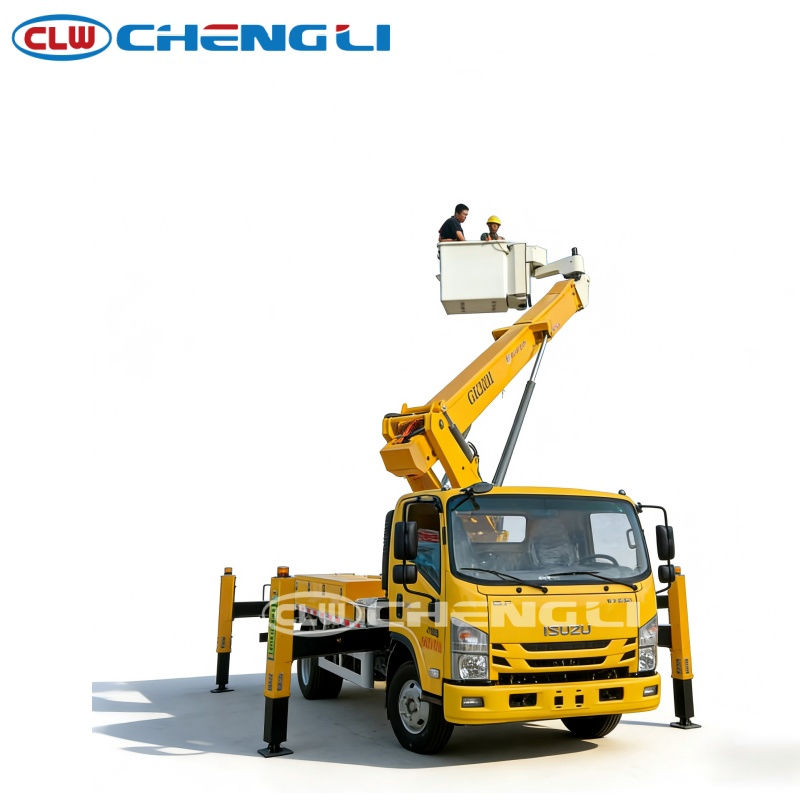
Choosing an aerial work truck by its maximum boom height alone can leave a municipality with a vehicle that cannot reach the work point, deploy its outriggers or operate safely near electrical equipment. This guide starts with the actual site, then examines reach, boom type, basket load, stability, electrical work and procurement.
1. Survey the job before opening a catalogue
Record the highest point a worker must reach, the horizontal distance past obstacles, the number of people and weight of tools in the basket, the space available for outriggers, the narrowest road and overhead restrictions. Note whether the truck stands on concrete, asphalt or soft ground. If work is near conductors, identify the voltage and consult the utility. Also estimate operating hours and daily driving distance.
These measurements help avoid both an oversized purchase and an under-specified truck.
2. Working height is not platform floor height
Working height often includes an assumed reach above the basket floor, but definitions and allowances vary by manufacturer. A headline maximum does not prove the basket can reach a point when the boom must extend sideways.
- Mark the highest actual work point.
- Allow for side reach and permitted setup conditions rather than relying on a fixed percentage.
- Ask for the model's working-envelope or range diagram and plot every difficult work point on it.
A maximum-height figure without the corresponding reach diagram is insufficient for a purchasing decision.
3. Straight, articulated or articulated-telescopic boom?
| Criterion | Telescopic straight boom | Articulated boom | Articulated-telescopic boom |
|---|---|---|---|
| Suitable work | Open roads, poles and signs with direct access | Work over trees, fences or canopies | Mixed work needing both obstacle clearance and reach |
| Strength | Simpler layout and direct positioning | Can reach up and over obstacles | Broad operating flexibility |
| Limitation | Less able to work around obstacles | Reach depends heavily on geometry | More complex hydraulics and controls |
| Maintenance consideration | Generally simpler | Additional joints to inspect | More components and inspection points |
If most work is on unobstructed roadside poles, a straight boom may be economical. Frequent obstacles favour an articulated configuration. Compare actual range diagrams, not generic boom labels. See the available crane and aerial-work vehicles for model-specific details.
4. Basket load, outriggers and stability
The basket rating covers people, tools and materials together. Calculate the real load before selecting a model. Ask for outrigger ground-bearing pressure and compare it with the standing surface; soft shoulders may require suitable pads or a different setup.
- Check permitted ground slope and wind speed in the operating manual.
- Specify interlocks that prevent unsafe boom operation when outriggers are not correctly deployed.
- Confirm completed-vehicle gross and axle weights against chassis and Thai registration limits.
5. An insulated boom does not permit contact with live wires
Work near electrical conductors requires a site-specific risk assessment, the applicable Thai rules and the electricity network operator's procedures. Do not substitute a generic clearance number for the required assessment. An insulated boom is an additional protective measure, not permission to touch a conductor or omit isolation, qualified personnel or personal protective equipment.
For an insulated model, specify the required insulation class, factory dielectric test report, whether both boom section and basket are insulated, and the applicable retesting method and interval. Keep insulating surfaces clean and dry and do not drill or attach fittings to them contrary to the manufacturer’s instructions.
6. An aerial platform is not an ordinary cargo crane
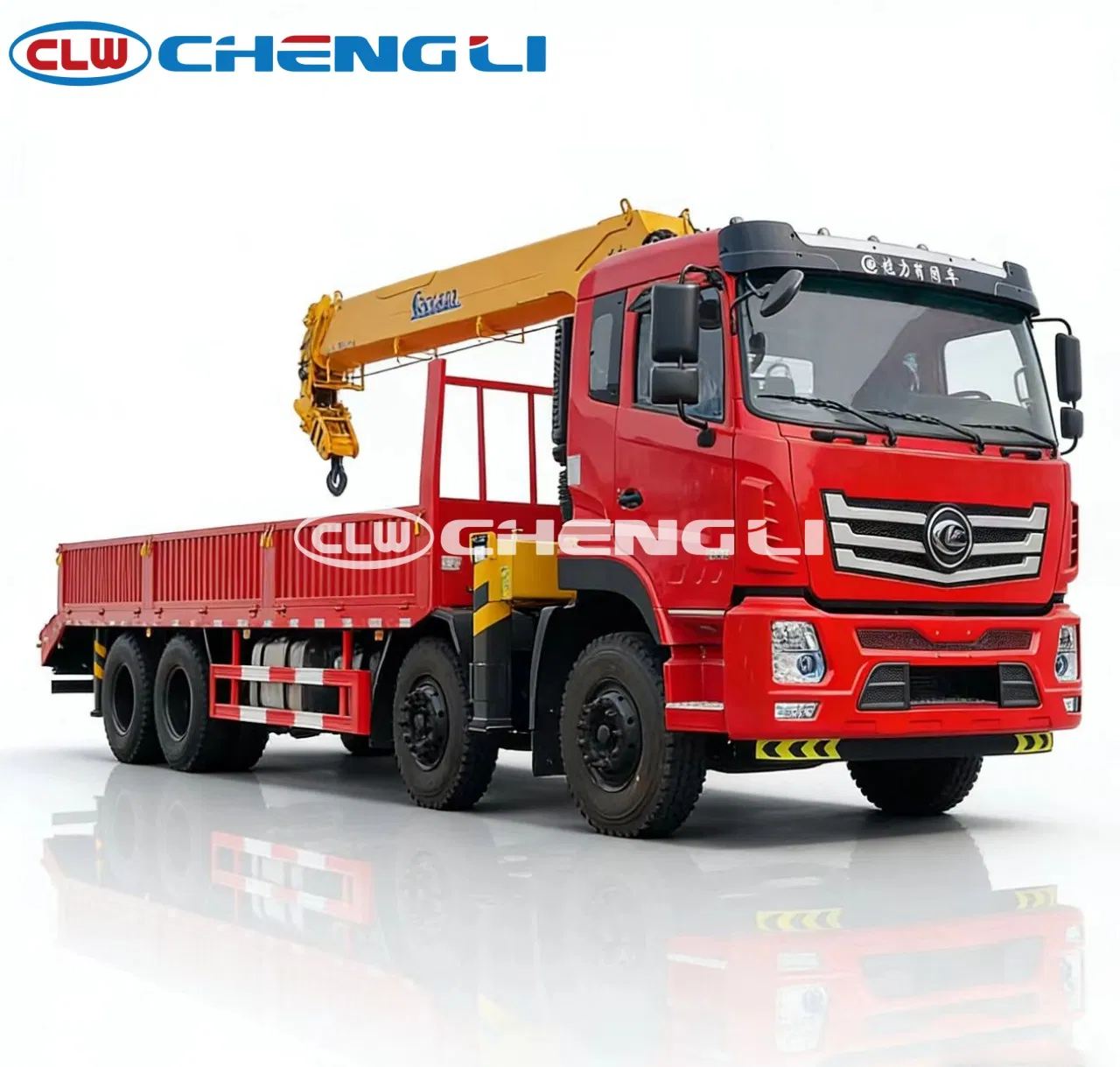
A truck crane's lifting rating describes a load at a stated radius; it is not a personnel basket rating. A purpose-designed aerial platform needs suitable upper and lower controls, emergency lowering, stability protection and documentation for lifting people. If the principal task is personnel access, select equipment designed and approved for that purpose. If it is lifting cargo, select a crane. A combination vehicle needs explicit design and approval for both uses.
7. Compare whole-life cost
| Cost group | What to include |
|---|---|
| Acquisition | Vehicle, shipping, insurance, import duties, taxes and registration |
| Operation | Fuel, operators, insurance and annual vehicle charges |
| Maintenance | Hydraulic oil, filters, cylinder seals, hoses, outrigger pads and tyres |
| Inspection | Applicable periodic checks, insulation tests and operator training |
| Downtime | Days waiting for parts and the cost of substitute equipment |
| Residual value | Estimated resale value under a stated assumption |
A lower purchase price can lead to a higher overall cost if spare parts are unavailable. Compare offers using documented prices, maintenance arrangements and realistic downtime assumptions, not an unsupported percentage.
8. Three questions that narrow the choice
- Where are the highest and farthest work points on the offered model's range diagram? If they cannot be plotted, the specification is not ready.
- Is any work near energised conductors, and at what voltage? This determines electrical controls and whether an insulated model is relevant.
- Who will maintain the truck and supply parts in years two to five? Set out the service and parts arrangements in the contract.
9. Check Thai requirements before production
Emissions. Larger diesel vehicles may fall under TIS 3046-2563, effective 1 January 2024. Confirm which requirement applies to the exact model and which documents Thai authorities will accept for import and registration.
Registration. Ask the provincial Department of Land Transport office to confirm the vehicle category, weights, dimensions and required documents before placing the production order.
Work safety. Have qualified local advisers check the applicable requirements for personnel-lifting equipment, periodic inspections, operator competence and work near electrical systems.
Right-hand drive. Specify right-hand drive for Thailand in the quotation and technical agreement, then inspect the actual vehicle before shipment.
Public tenders. Use measurable performance criteria, including required height and side reach at the real work point, basket load, safety equipment and acceptance documents.
10. Clarify after-sales service and inspection
Separate contractual responsibility for the chassis, boom, basket, hydraulics and controls. Specify warranty periods, exclusions, who pays for parts, labour and freight, claim response arrangements and how long parts will remain available. Confirm these terms for the actual vehicle, not from a generic promise.
Consider ordering model-specific cylinder seal kits, hydraulic hoses and fittings, filters, outrigger pads, pins, bushes and control spares with the first truck. Ask for separate chassis and aerial-equipment maintenance schedules. The Thai operator should arrange inspections required by applicable law and standards, including appropriate retesting for insulated equipment.
Agree the language of manuals, translation scope, training and technical support in writing. CVehicle does not currently operate its own service centre in Thailand, so buyers should plan local maintenance support and agree any remote assistance, parts shipment or on-site engineer visit for the project.
11. Put order and acceptance terms in writing
The quotation and contract should identify the chassis and boom models, basket rating, working-envelope diagram, safety equipment, right-hand-drive configuration, documents to be delivered, trade and payment terms, production and shipping schedule, acceptance method, and import and registration responsibilities.
If inspection is by video, at the factory or through an independent party, agree test criteria and cost allocation in advance. Production time, warranty, parts availability and response time need project-specific confirmation.
12. Twelve checks before signing
- Plot required height and reach on the offered model's range diagram.
- State basket load in kilograms, including people and tools.
- Choose boom type according to actual obstacles and access.
- For insulated equipment, specify class and a model-specific dielectric test report.
- Identify the chassis and confirm right-hand drive.
- Confirm emissions requirements and documents for Thai import and registration.
- Obtain completed-vehicle weight and outrigger ground-pressure data.
- Specify outrigger interlocks, emergency lowering, upper and lower controls, and overload warnings.
- Define chassis and aerial-equipment warranty responsibilities separately.
- Agree initial spares and the parts-supply period.
- Agree manuals, translations and training.
- Define pre-shipment functional, rated-load, emergency-lowering and document checks.
Frequently asked questions
Is a 14 m working-height truck enough for streetlights?
It depends on the actual work-point height, parking position and side reach. Check the point on the model's range diagram rather than relying on maximum height alone.
Does an insulated boom allow work on a live 22 kV line without isolation?
No. A dielectric test rating is not authorisation to contact an energised conductor. Follow applicable clearance, permit, competence and protection requirements.
How long will production and delivery to Thailand take?
Timing depends on chassis availability, aerial equipment, shipping and import procedures. Obtain separate production and delivery milestones in the contract.
Does warranty include labour and parts freight?
Only the agreed contract can answer that. Specify each cost, scope and exclusion for the chassis and aerial equipment.
Is there a CVehicle service centre in Thailand?
CVehicle does not currently operate its own centre there. Agree remote support, parts arrangements and local maintenance capacity for the project.
How should a government tender avoid brand-locking?
Use measurable height, reach, basket load, safety and documentation requirements, and have procurement specialists review the wording.
Related information
For a project-specific specification and quotation, send the work-point height, side reach and operating-site details to [email protected] or use the contact page.