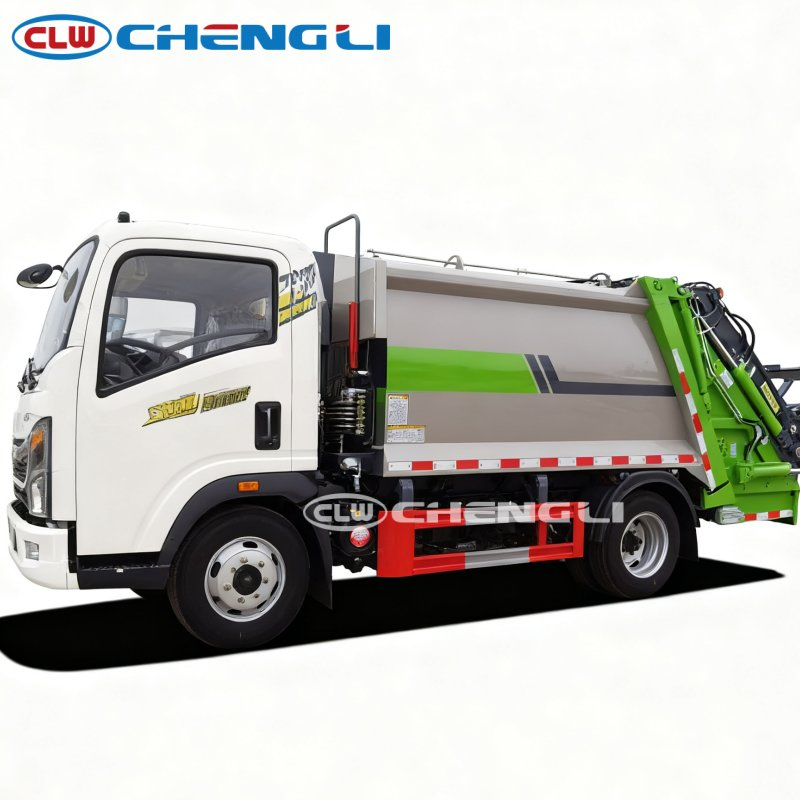
Municipal buyers often start by asking for a body volume in cubic metres. Yet the practical choice depends first on the narrowest street, the number of collection points, travel time to the transfer station and the legally permitted payload. Body volume should be selected after these operating conditions are understood.
This guide compares three common collection systems: rear loaders, hooklifts and skip loaders. It provides a way to assess each option using your own route data. Use the technical documents for the model offered to determine body capacity, compaction ratio and unladen weight. The examples here illustrate the selection method.
Survey the waste, collection points and route before choosing a truck
Start with three sets of observations. If they are unavailable, survey actual routes for at least a week, including the day with the highest waste volume.
Waste characteristics. Distinguish household refuse, wet-market waste, construction debris and industrial waste. They do not necessarily suit the same collection system. Wet organic waste can be heavy and may produce leachate during transport, especially in the rainy season. The leachate tank and rear-door seals therefore deserve explicit attention in the tender specification rather than being treated as incidental accessories.
Stops and route. Record the number of collection points per trip, the distance between them, the narrowest lane, turning areas, bridges with weight restrictions, and the distance from the final stop to a transfer station or disposal site. These conditions may determine chassis size before body volume becomes relevant.
Working cycle. Estimate the number of trips that fit into a shift:
Trips per day = net working time ÷ (route collection time + round-trip travel to the unloading point + unloading and cleaning time).
If the calculation yields 1.3 trips, plan conservatively for one complete trip. A larger body helps when the truck fills before finishing its route. If travel to the unloading point consumes the available time, consider fleet size or transfer arrangements instead of assuming a larger body will solve the problem.
Confirm at this stage: the narrowest lane, bridge limits, peak daily waste quantity and the emissions requirements applicable to the procurement.
When is a rear loader suitable?
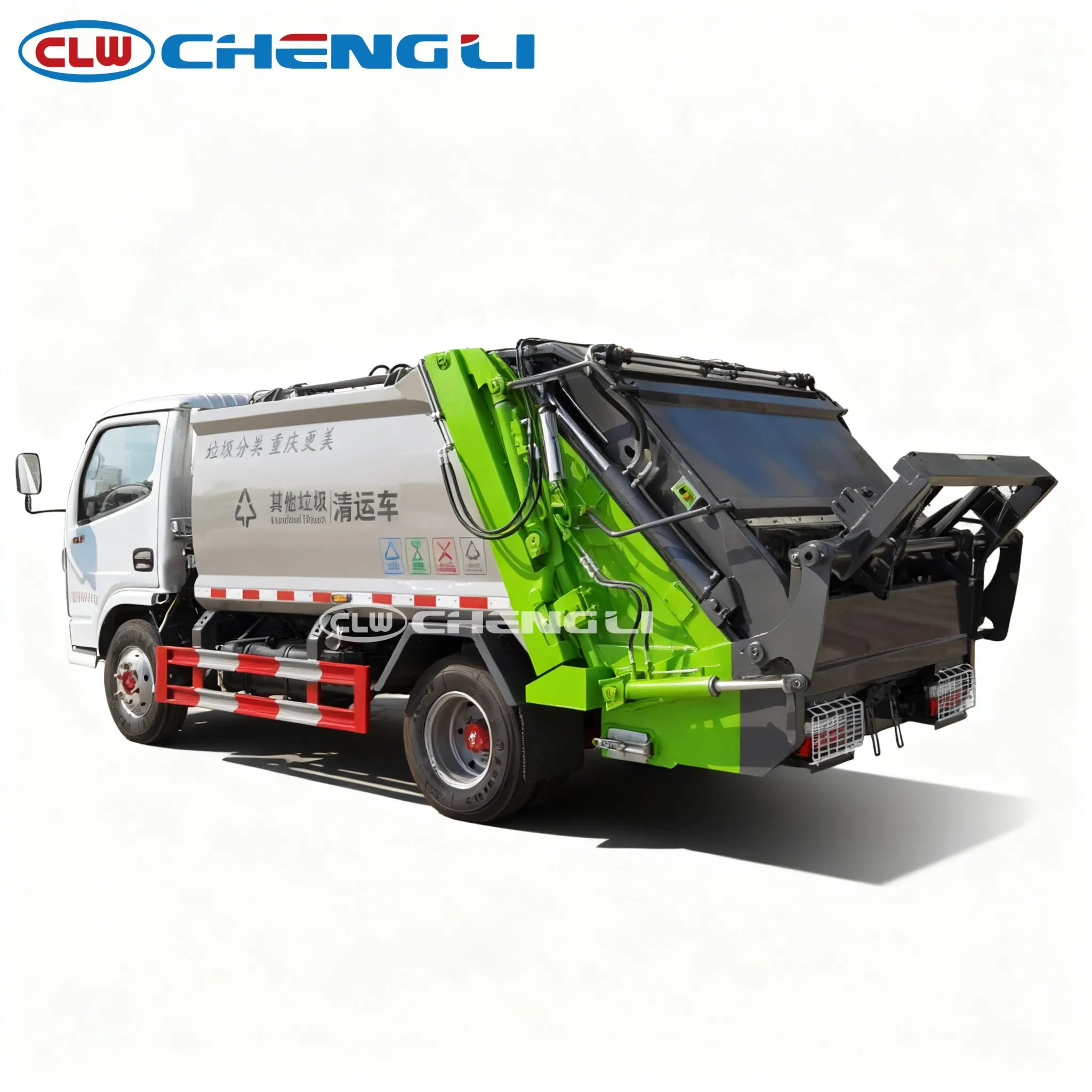
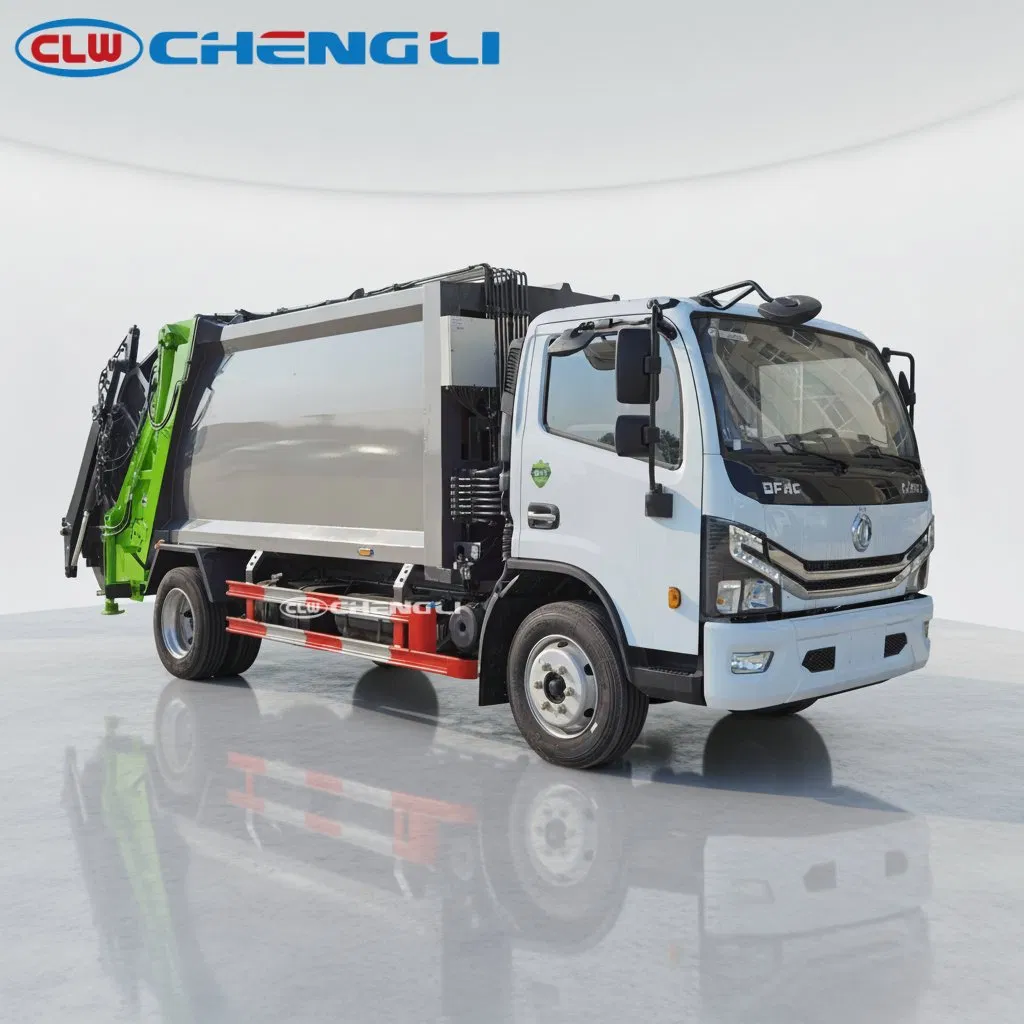
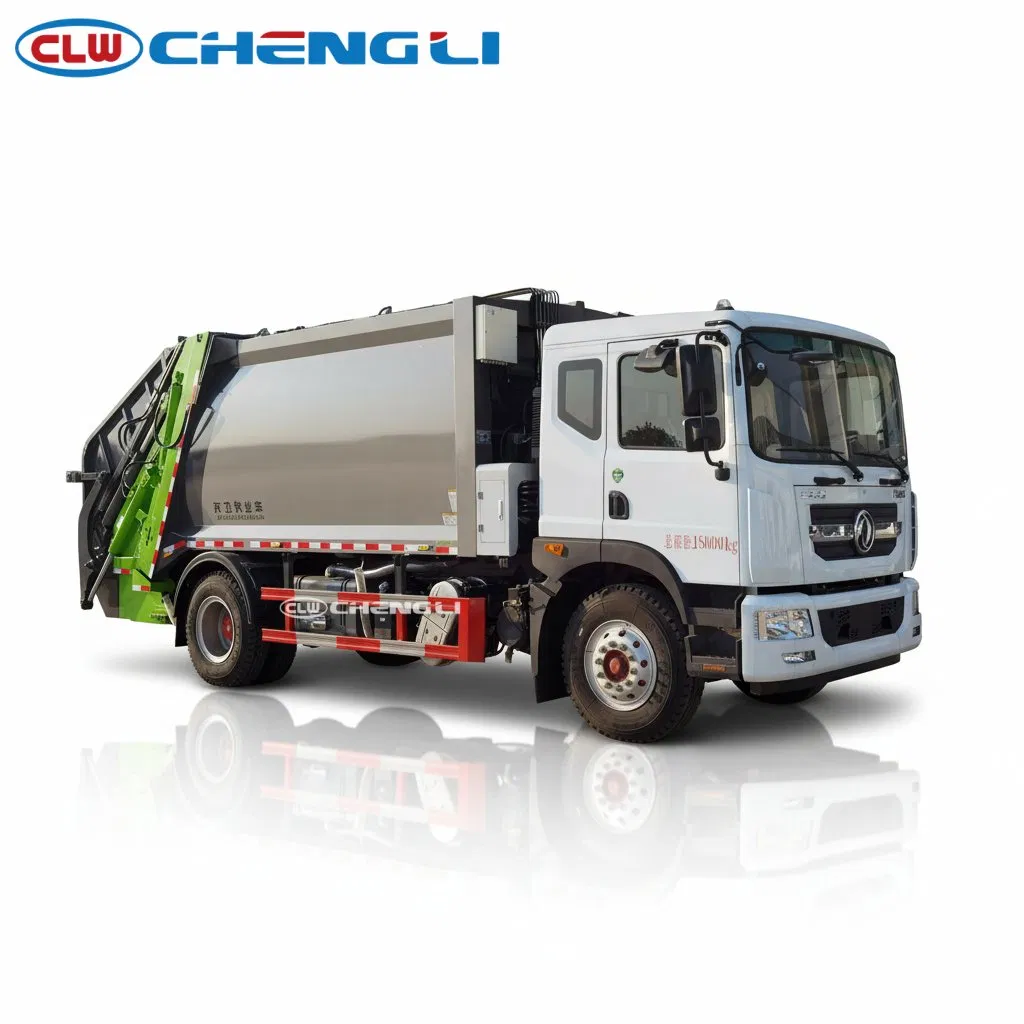
A rear loader is intended for routes with many small, frequent collection stops. Waste enters through the rear hopper and a hydraulic mechanism moves and compacts it inside the body. This can reduce waste volume and the number of unloading trips, subject to the vehicle's weight limits.
The key distinction is that body volume is not the same as legally usable payload. A preliminary payload calculation is:
Usable payload = maximum permitted gross vehicle weight − actual unladen vehicle weight, including body, compactor, fuel and crew.
Compare that weight allowance with body volume multiplied by the density of the compacted waste. The lower limit governs. Wet municipal waste may reach the weight limit before filling the body by volume. Increasing body size can also increase unladen weight and reduce the payload available for waste.
Suitable for: daily collection along streets and lanes with numerous household or small-bin stops, including routes using many 240 L bins.
Generally unsuitable for: large concrete pieces, scrap metal, large branches and bulky construction debris that may damage the compaction mechanism; also consider another system where a container must remain at a high-volume collection point.
Confirm for the offered model: local waste density, actual unladen weight, leachate-tank capacity and the compaction cycle specified by the manufacturer.
How do hooklifts and skip loaders differ?
Both systems use detachable containers, but they lift the container differently and require different working space.
Hooklift. A hook arm engages a loop at the front of the container and draws it onto the chassis lengthwise. One truck can rotate among several containers. This can suit large collection points, transfer stations, markets and some construction-debris operations. Loading and unloading require clear, straight space behind the truck while the container is tilted and drawn in. The required clearance depends on container length and the selected lifting system's working envelope.
Skip loader. Side arms engage lifting points on a skip and raise it onto the chassis. This can require less straight clearance behind the truck and, for some configurations, can lift over a low kerb or obstacle. It may suit constrained urban sites or markets. Skip containers are commonly smaller than hooklift containers, while open-top skips may need covers to reduce spillage and rainwater entry. Verify these features for the actual equipment offered.
Measure the tightest collection point before choosing by capacity. A larger container is of little value if the truck cannot load it at the site.
Confirm: how many containers must remain at collection points, compatibility of the loops or lifting points, space at every site, and lifting height near roofs or overhead power lines.
Compare the cost of the whole collection system
The truck purchase price is only one component. Compare proposals on the basis of the complete operating system.
Initial cost can include the chassis, body and hydraulic equipment, containers required for rotation, options, and freight under the agreed trade term. Hooklift and skip-loader budgets should account for the number of containers, not just the truck. As a starting planning allowance:
Minimum containers per truck ≈ containers that must remain at collection points simultaneously + one spare for cleaning or repair.
The final number depends on the actual collection cycle and available storage space.
Operating cost includes fuel, crew, tyres, hydraulic oil, wear parts and cleaning. A rear loader may require crew at the rear hopper, while a container system may use fewer people per trip; actual staffing depends on local operating rules and the chosen equipment.
Downtime cost also matters. Confirm chassis and body warranty terms separately, including who pays for parts, labour and international shipping, and how long replacement parts can be supplied. Put these responsibilities in the contract for the particular vehicle ordered.
Compare cost per tonne collected or cost per completed trip, not only cost per truck. Different fleet sizes and trip counts can materially change total cost over the vehicle's service life.
Comparison of the three systems
| Decision point | Rear loader | Hooklift | Skip loader |
|---|---|---|---|
| Typical waste | Household and wet-market refuse | Consolidated waste and suitable construction debris | Mixed or moderate-volume waste, subject to container design |
| Collection pattern | Many small stops along a route | Leave containers at sites and exchange them | Lift and replace skips at individual sites |
| Main advantage | Compaction may reduce unloading trips | One truck can rotate among multiple containers | May work with less straight clearance behind the truck |
| Main limitation | Large, hard objects can damage the compactor | Requires sufficient rear clearance for container loading | Containers are commonly smaller; open tops may need covers |
| Staffing | Rear-hopper crew may be required | Staffing depends on site arrangements | Staffing depends on site arrangements |
| Often-forgotten cost | Leachate control and cleaning | Spare containers and storage space | Containers and covers |
| Confirm before ordering | Unladen weight and local waste density | Clearance and container interface | Lifting height and container interface |
This comparison describes system types, not guaranteed specifications of every vehicle. Check the drawings and technical agreement for the proposed model.
Three quick questions to narrow the choice
Is the waste scattered or concentrated? For many household and shop stops along a route, begin by evaluating a rear loader. For a few high-volume collection points, begin with a detachable-container system.
How much clear space exists behind the truck at the tightest point? A hooklift is viable only if its container can be loaded within the actual working envelope. Where straight rear clearance is limited, assess whether a skip loader can operate safely. Check capacity only after confirming access.
Does the current truck fill too soon, or does the shift run out of time? The first problem may justify a different body size or compaction system. The second may require more vehicles or a better-positioned unloading point rather than a larger truck.
Thai requirements and documents
Right-hand drive. For operation in Thailand, specify right-hand drive in the technical agreement. Confirm that the offered configuration can be supplied and registered in that form, and inspect the actual truck before shipment.
Emissions. Thai vehicle-emissions requirements are issued through the relevant Thai Industrial Standards (TIS). Heavy-duty diesel standards have changed over time, including requirements that took effect in January 2024. Before production, confirm the standard applicable to the vehicle at import, together with the evidence accepted by Thai authorities. An engine's standard in its country of origin does not by itself establish that the completed vehicle has the documents needed for Thai import and registration.
Registration. A special-purpose vehicle must meet the requirements applicable to its registration and road use. Confirm permitted gross weight, axle loads, dimensions and mandatory safety equipment with the Department of Land Transport and other relevant authorities before locking the tender specification.
Import responsibilities. The buyer and seller should specify responsibility for destination customs procedures, registration and origin-side documents in the contract, taking the agreed trade term into account.
Supporting documents. Identify the certificates, conformity documents and registration materials required at the destination, then list the documents to be supplied under the contract before production begins.
Public procurement. A municipal tender specification should describe measurable functional requirements and an acceptance method. Avoid unnecessarily restricting the tender to the dimensions or proprietary features of one particular model.
Purchasing, delivery and warranty terms
The following are points to define in the quotation, contract and technical agreement. Actual terms can vary by model and order.
| Item | What to agree and verify |
|---|---|
| Steering | Specify right-hand drive for Thailand and confirm the offered configuration |
| Emissions | Verify the standard in force and the documents accepted by Thai authorities before production |
| Payment method | Agree whether bank transfer (T/T), letter of credit (L/C) or another method applies |
| Payment schedule | Record deposit and balance terms in the quotation and contract |
| Currency | Agree the invoicing currency, such as USD or CNY |
| Trade term | Select and define the applicable Incoterms rule and named place or port |
| Origin port | Confirm the port that will actually be used for this order |
| Transport | Confirm whether container, flat rack, conventional cargo or another method is suitable |
| Production period | Confirm against the model, quantity, modifications and production plan |
| Pre-shipment inspection | Agree whether video, factory or independent inspection is required, and who pays |
| Chassis warranty | Confirm duration, scope and responsible party with the chassis manufacturer |
| Body warranty | Confirm duration, scope and responsible party in the contract |
| Warranty expenses | Specify who pays for parts, labour and international shipping |
| Spare parts | Agree the parts list and supply period |
| Manuals and training | Agree language, format and training scope |
| Technical support | Agree channels, languages and response times |
Do not assume that a general company policy applies to every chassis or equipment combination. The signed documents for the selected truck govern.
Pre-purchase checklist
- Weight: obtain the permitted gross vehicle weight, actual unladen weight and axle loads. Calculate usable payload rather than choosing from body volume alone.
- Dimensions: compare width, length, turning circle and height during lifting with the narrowest lane and the tightest site.
- Container compatibility: confirm hook-loop or skip lifting-point dimensions and the number of containers required.
- Leachate control: confirm tank capacity, discharge valve and rear-door sealing for wet waste.
- Hydraulics and electrical system: confirm pump, cylinders, controls and recommended first-year wear parts.
- Safety: confirm emergency stop, lifting locks, warning lights, reversing camera and equipment required at the destination.
- Emissions: specify the applicable requirement and verify that the agreed documents support import and registration when the vehicle arrives.
- Right-hand drive: include it in the technical agreement and inspect it before shipment.
- Documents: agree the certificates and registration documents that the destination authority requires.
- Inspection: choose video, factory or independent inspection and allocate its cost.
- Warranty and parts: define separate chassis/body responsibilities, claim procedures and parts availability.
- Training and destination support: agree operator and mechanic training, language, cost allocation and the service channel available for the project. Do not assume a local Thai service location without confirmation.
Frequently asked questions
Does a larger body always mean more waste per trip?
No. Wet municipal refuse may reach the legal weight limit before a body is full by volume. A larger body can also increase the truck's unladen weight. Calculate usable payload first, then choose a body volume that fits the route and waste density.
If both a hooklift and a skip loader can serve a site, which should we choose?
Measure the clear, straight space behind the truck first. If it is sufficient for the proposed container and hooklift working envelope, evaluate the hooklift's larger container and rotation system. If rear clearance is limited, assess whether a skip loader can operate safely. Then compare capacity, staffing and total system cost.
How many containers should one hooklift truck have?
Start with the number of sites that need a container in place simultaneously, plus a spare for cleaning or repairs. Then adjust that estimate against the real collection cycle. Too few containers can leave the truck waiting for an empty one, undermining the main benefit of the system.
Related vehicles and category
Browse the garbage-truck range for existing vehicle pages and specifications. Compare only models that match the intended waste, route, payload and steering requirements.
Information to provide for a quotation
Send the project details to [email protected]. Record the final vehicle configuration and commercial terms in the order contract.
To make quotations comparable, provide:
- Work and site: waste type, number of collection points, narrowest lane and distance to the transfer point.
- Daily volume: peak-day waste quantity and the desired body or container size.
- Working pattern: hours and trips required per day.
- Emissions: the standard required for procurement and registration.
- Quantity and destination: number of trucks, number of containers and destination port.
- Trade terms: preferred delivery term, such as FOB, CFR or CIF.
- Documents: certificates and registration documents required by the destination authority.
- Delivery target: the date needed, for assessment against production and shipping plans.
For Thailand, specify right-hand drive in the technical agreement and confirm the offered model's availability in that configuration. The signed contract determines final pricing, delivery and documents.