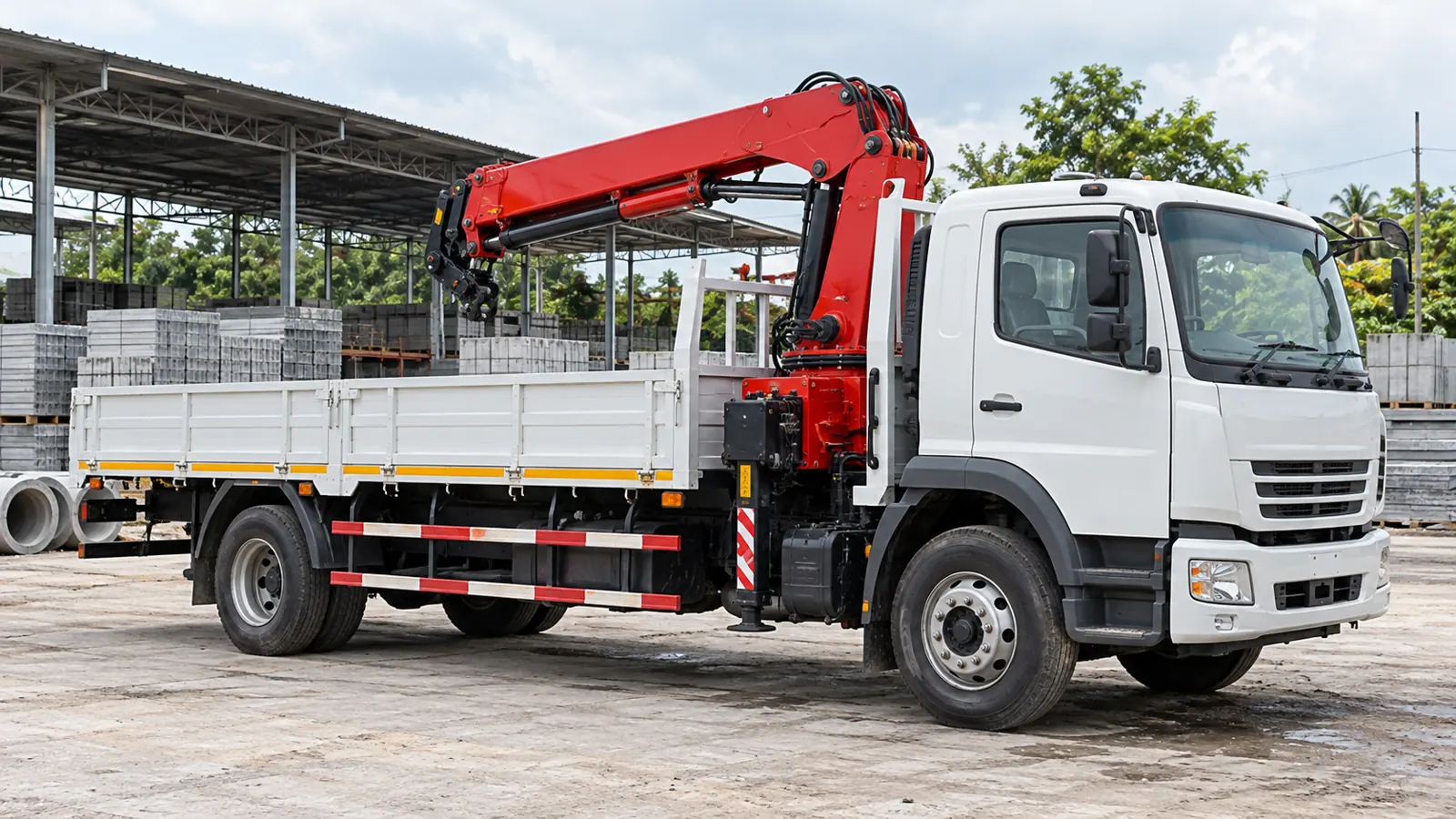
In Thai procurement conversations, rot crane can refer to several different machines. A truck-mounted loader crane, often called a rot hiab, combines a lifting crane with a goods-carrying truck. A dedicated mobile crane is built primarily for lifting, while a crawler crane travels on tracks and is commonly planned around a longer site deployment.
Choose between them by comparing the load at the required working radius, the need to transport goods, and the space and ground available for setting up. A capacity in a model name does not describe every lift the machine can perform.
Why the names can cause purchasing mistakes
A request for a “crane truck” can mean a delivery truck with a crane behind its cab, a dedicated road-going lifting machine, or another crane configuration. These machines have different transport arrangements, setup requirements and operating envelopes.
Describe the work before specifying a nominal capacity. Include the heaviest individual item, its dimensions, the pickup and placement positions, and the distance from the crane's rotation centre to the load. A machine that can lift a load close to its base may not handle that load at the required outreach.
Truck-mounted loader cranes: lifting and delivery together
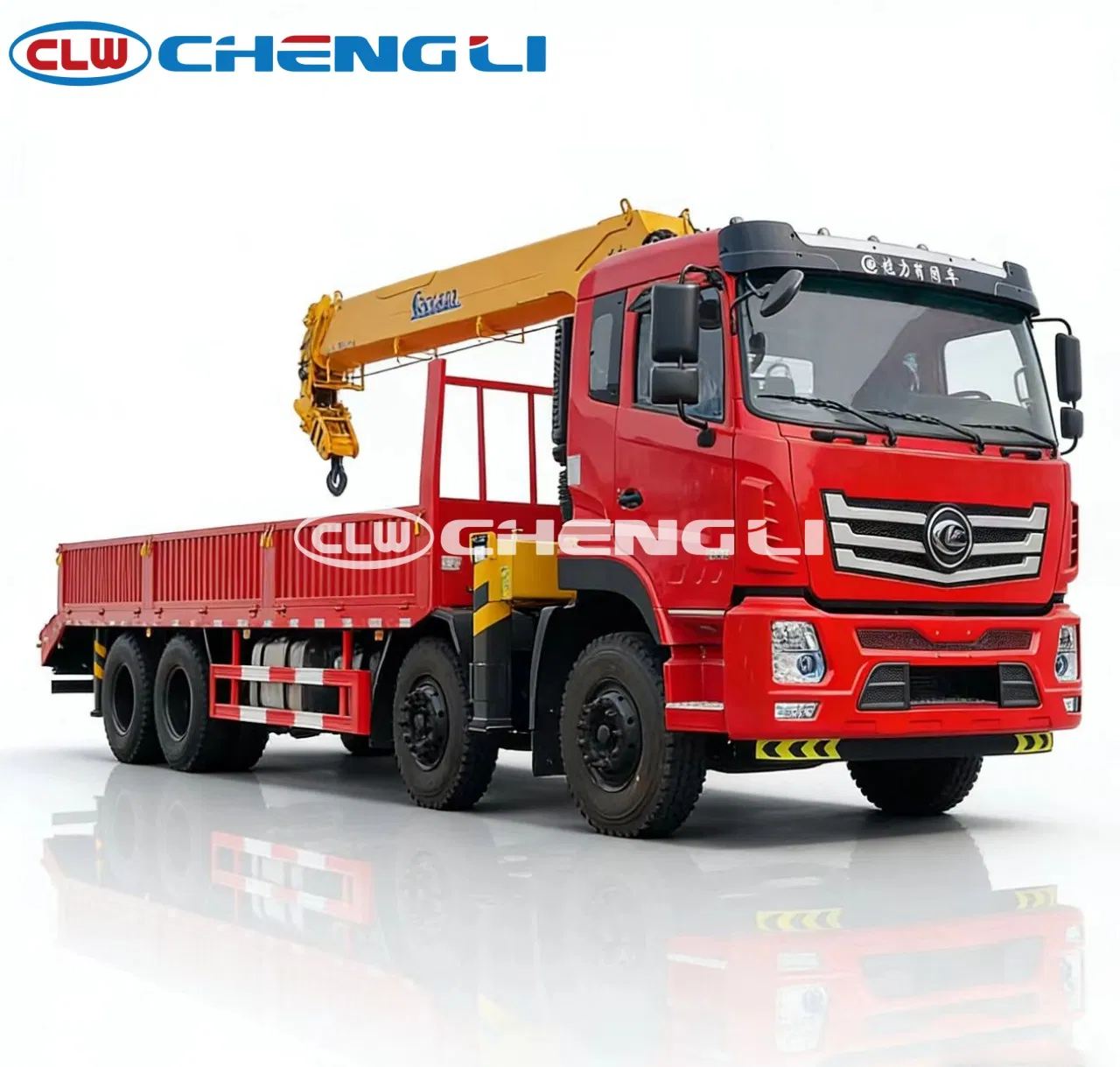
A loader crane is installed on a truck chassis, commonly behind the cab or at the rear of the body. With a suitable cargo body, it can load an item, transport it and unload it at the destination. In Thailand, “rot hiab” is commonly used for this vehicle category; it should not be treated as a guarantee of a particular crane brand.
Typical applications include delivering construction materials, placing pipes and prefabricated components, moving equipment, and supporting municipal or industrial maintenance. The crane, subframe, stabilisers and accessories consume part of the chassis payload allowance. Compare the remaining legal payload and usable body length, rather than choosing the crane in isolation.
| Boom arrangement | Main characteristic | Selection questions |
|---|---|---|
| Straight telescopic boom | Nested boom sections extend along the boom axis | Does its load chart cover the required radius and height? Is there enough clearance for the lift path? |
| Articulated or knuckle boom | Hinged sections fold for transport and offer different positioning geometry | Does the actual configuration reach the placement point? What space is needed for folding, operating and stabilising? |
Neither arrangement removes the need for an approved lifting plan. Geometry, installed equipment and the manufacturer's operating instructions determine the permitted movement.
Dedicated mobile cranes
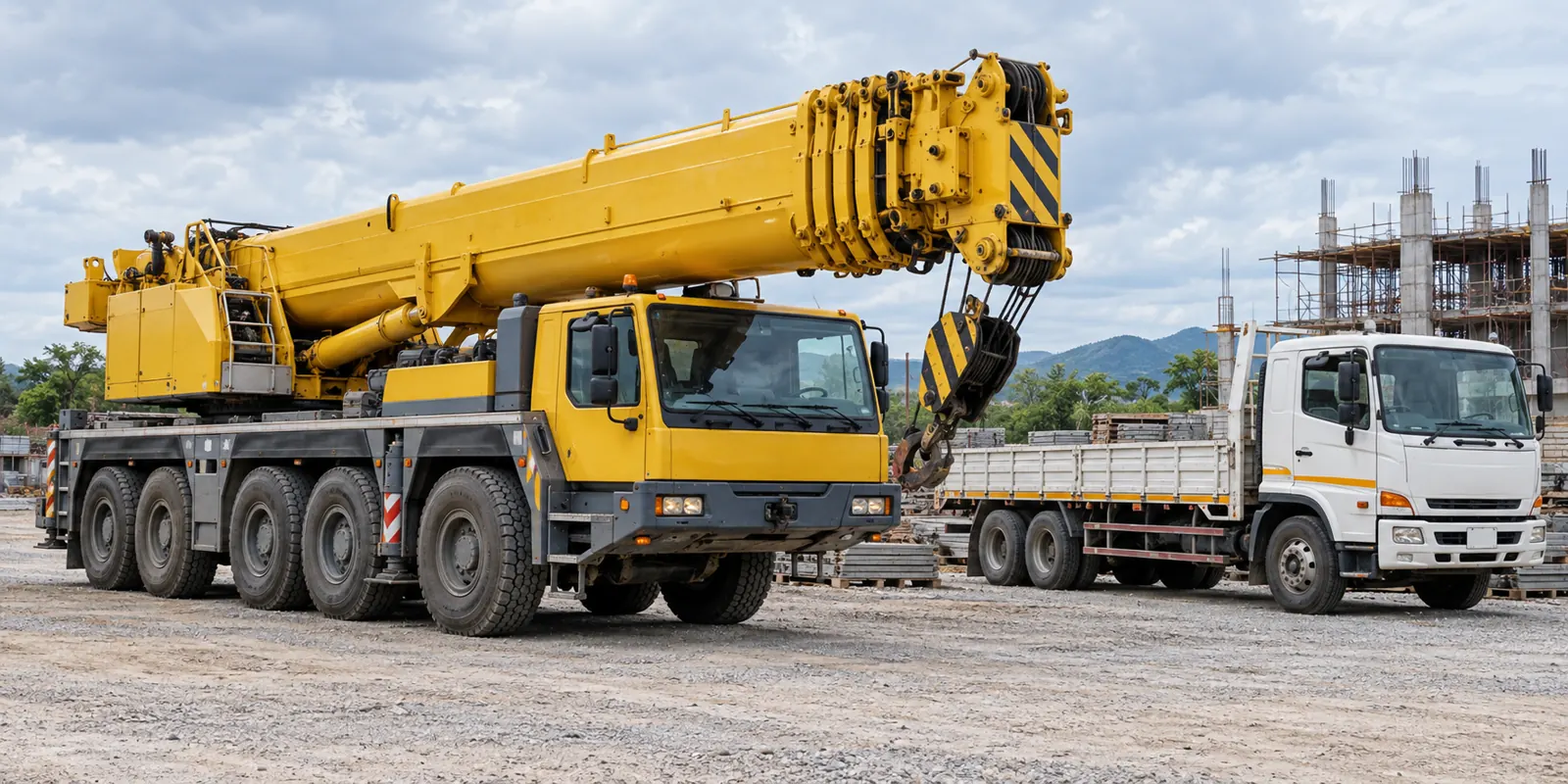
A dedicated mobile crane uses its carrier as the lifting platform. It is selected primarily for lifting operations rather than carrying the customer's cargo on a delivery body. Goods normally arrive on separate transport.
Applications can include structural installation and positioning heavy machinery. Road-going, all-terrain and rough-terrain configurations have different access and transport requirements. Plan the setup footprint, ground-bearing capacity, counterweight arrangement, approach route and support transport for the particular machine.
Crawler cranes
Crawler cranes use tracked undercarriages. They can suit construction projects where the lifting machine remains on site for an extended period. Transport to the site, assembly space and ground preparation form part of the selection decision. Any travel with a suspended load must be specifically permitted by the machine's instructions and lifting plan; tracks alone do not make it acceptable.
Comparing the three categories
| Purchasing consideration | Truck-mounted loader crane | Dedicated mobile crane | Crawler crane |
|---|---|---|---|
| Main role | Load, deliver and place goods with a suitable truck body | Perform lifting operations using a dedicated carrier | Perform lifting operations from a tracked platform |
| Cargo transport | Remaining payload and body dimensions determine what can travel on the truck | Normally uses separate goods transport | Normally uses separate goods transport |
| Site planning | Stabiliser footprint, chassis loads and delivery access | Setup area, ground bearing, counterweights and carrier access | Ground preparation, transport, assembly and deployment duration |
| Best starting point | Repeated deliveries that also need loading and unloading | Installation work requiring the selected crane's lifting envelope | Projects suited to a longer tracked-crane deployment |
| Capacity check | Installed crane's load chart and chassis limits | Exact machine and setup load chart | Exact machine and setup load chart |
For a delivery operation, start by evaluating a loader crane and its remaining payload. For a dedicated lifting project, compare the actual lifting envelope and site arrangements of mobile or crawler cranes. There is no universal tonnage threshold that replaces that assessment.
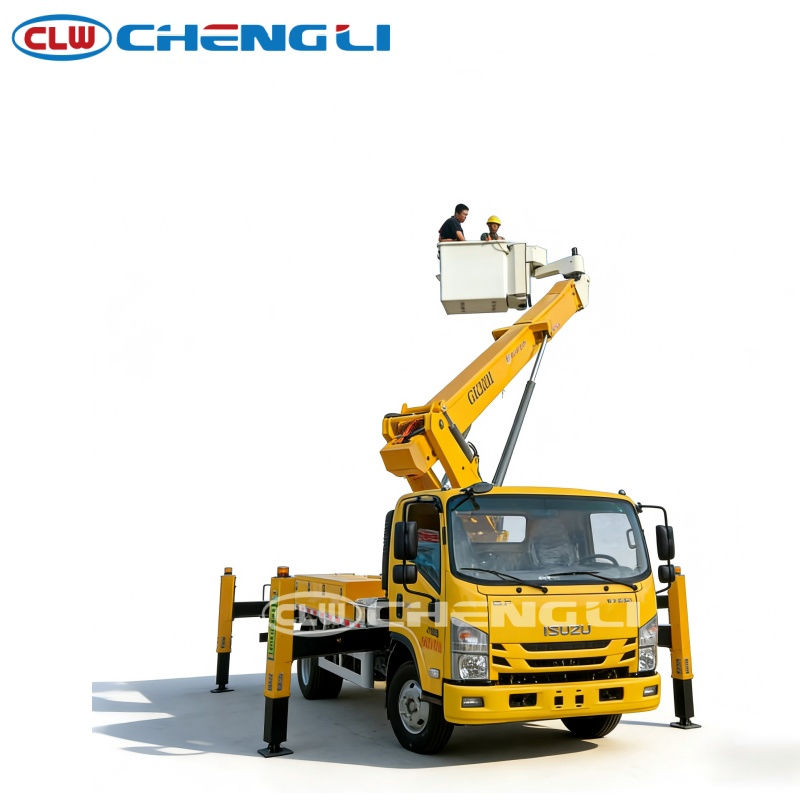
For work involving people at height, select purpose-designed access equipment and its permitted configuration. A material-lifting crane is not automatically suitable for lifting people. Browse the crane and aerial-work vehicle category when defining the required vehicle type.
Read the load chart for the actual job
Record the load weight, lifting accessories, working radius, required height and pickup and placement points. Use the load chart for the exact boom, stabiliser and accessory configuration offered. Include the manufacturer's treatment of hook blocks and lifting accessories in the assessment.
Do not substitute a simple weight-times-distance calculation for the load chart. The installed crane, chassis integration and permitted operating area all affect the final vehicle specification. Put mounting documents, equipment weights and chassis restrictions into the technical agreement.
Documents and project preparation
Request the load chart, operating instructions in a language suitable for the operators, chassis installation documents, safety-equipment list and acceptance-inspection plan. Have competent personnel assess ground conditions, obstacles, overhead lines and the transport route before finalising the work plan.
Plan operator roles, training, inspections and project documentation around the requirements applicable to the job. The buyer handles destination customs clearance and registration. The six-wheel and ten-wheel truck weight planning guide explains why body and equipment selection must be considered together with the chassis. Specify right-hand drive for Thailand in the purchase request.
Seven questions to answer before requesting a quotation
- What is the heaviest item, and at what radius must it be lifted? Provide the weight and pickup and placement positions for assessment against the load chart.
- What lifting height and clearance are required? Describe the complete route of the load, including overhead obstructions.
- Which boom arrangement fits the work? Compare the actual operating geometry and folded dimensions of the proposed equipment.
- What cargo body is needed? State load dimensions, body length and the payload required after fitting the crane.
- Which chassis fits the complete vehicle? Evaluate gross and axle loads, installation weight, access and registration documents. See the chassis information section.
- How much stabiliser space is available? Provide site dimensions and ground information. Use only operating configurations permitted by the machine's instructions and chart.
- What does the Thailand purchase specification require? Include right-hand drive, destination documents, import and registration responsibilities, and operator preparation.
Compare loader-crane trucks on CVehicle
The crane and aerial-work category includes truck-mounted configurations for material handling. The following existing product pages provide starting points for comparing chassis and equipment layouts; the signed technical specification must match the planned lifting work.
- Dongfeng loader-crane truck with straight boom
- Dongfeng loader-crane truck for material delivery
- FAW loader-crane truck
- Chengli loader-crane truck
- JMC loader-crane truck
Include load weight, outreach, height, stabiliser space, body requirements and right-hand drive in the enquiry. Compare the proposed installation with its matching load chart rather than assuming that vehicles sharing a brand have the same lifting capability.
Inspection, delivery and after-sales planning
This website is operated by the Chengli Group operations team, coordinating manufacturing, sales and export within the group. Buyers can arrange video inspection, a factory visit or inspection by an independent agency such as SGS or BV. Independent inspection costs are normally borne by the buyer. The factory inspection location is Chengli Automobile Industrial Park, Zengdu Economic Development Zone, Suizhou, Hubei, China.
For a crane-truck order, agree on the vehicle and equipment inspection checklist, operating demonstration and documents before dispatch. Production is typically 30–90 days after receipt of the deposit; specification and order quantity determine the contractual schedule. Sea transport, customs clearance and registration require separate planning.
Payment is accepted by T/T or L/C. The usual arrangement is a 30% deposit and 70% balance before dispatch, with exceptions for particular orders. Available trade terms include FCA, FOB, CFR, CIF, DAP and CIP. Record the selected terms and included services in the quotation and contract.
Chassis warranty coverage follows the chassis OEM's 12-month terms, and upper-body equipment carries a 12-month warranty. Spare-parts support is provided for five years. The contract defines coverage and exclusions. Agree on operating manuals, training and the parts package for the selected vehicle; supplier familiarisation should be planned separately from the operator qualifications required for the project.
Frequently asked questions
What is a “rot hiab”?
In Thai usage, it commonly means a truck-mounted loader crane. A suitable vehicle can load goods onto its body, transport them and unload them at the destination. The term alone does not identify the crane manufacturer or its rated performance.
How is a loader-crane truck different from a mobile crane?
A loader-crane truck combines material lifting with a goods-carrying body. A dedicated mobile crane is primarily a lifting machine and normally relies on separate goods transport. Choose by the actual lifting envelope, cargo requirements and site conditions.
Can a crane labelled “10 tonnes” lift that load everywhere?
No. Permitted load depends on radius, boom length, setup and other conditions stated in the load chart. Use the chart for the exact proposed configuration and include lifting accessories in the assessment.
How should personnel and the work area be planned?
Define operator roles, training, inspections and project documentation. Competent personnel should assess ground conditions, access, obstacles and overhead lines before preparing the lifting plan.
How long should a buyer allow for production?
Typical production is 30–90 days after the deposit, with the contractual schedule based on specification and quantity. Add time for transport, customs clearance and registration, which are separate from production.
Discuss the vehicle required for your work
Send the load weight, working radius, lifting height, body dimensions and site conditions through the contact page. Include right-hand drive and the documentation needed for use in Thailand so the quotation can define the complete vehicle and equipment configuration.