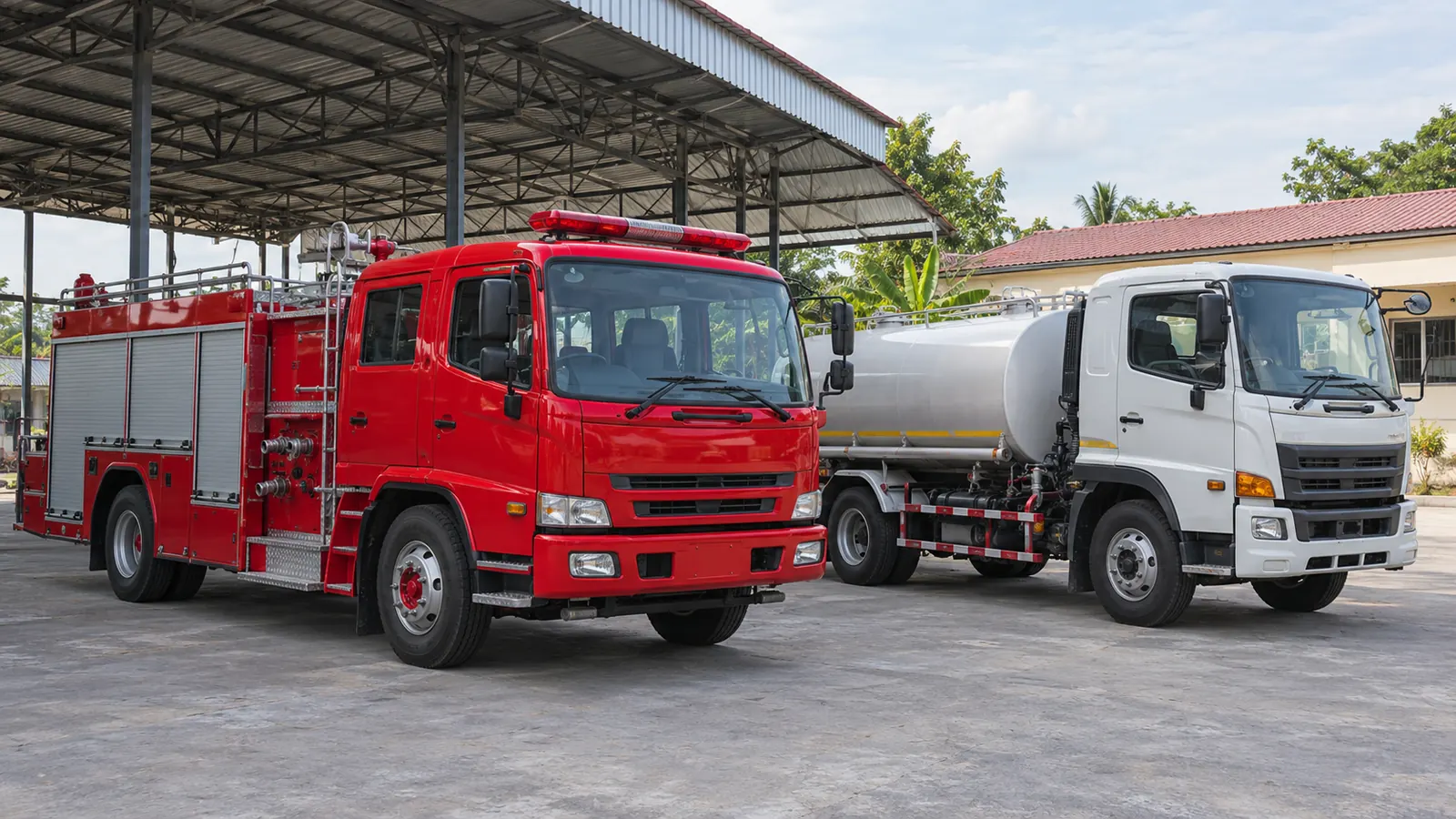
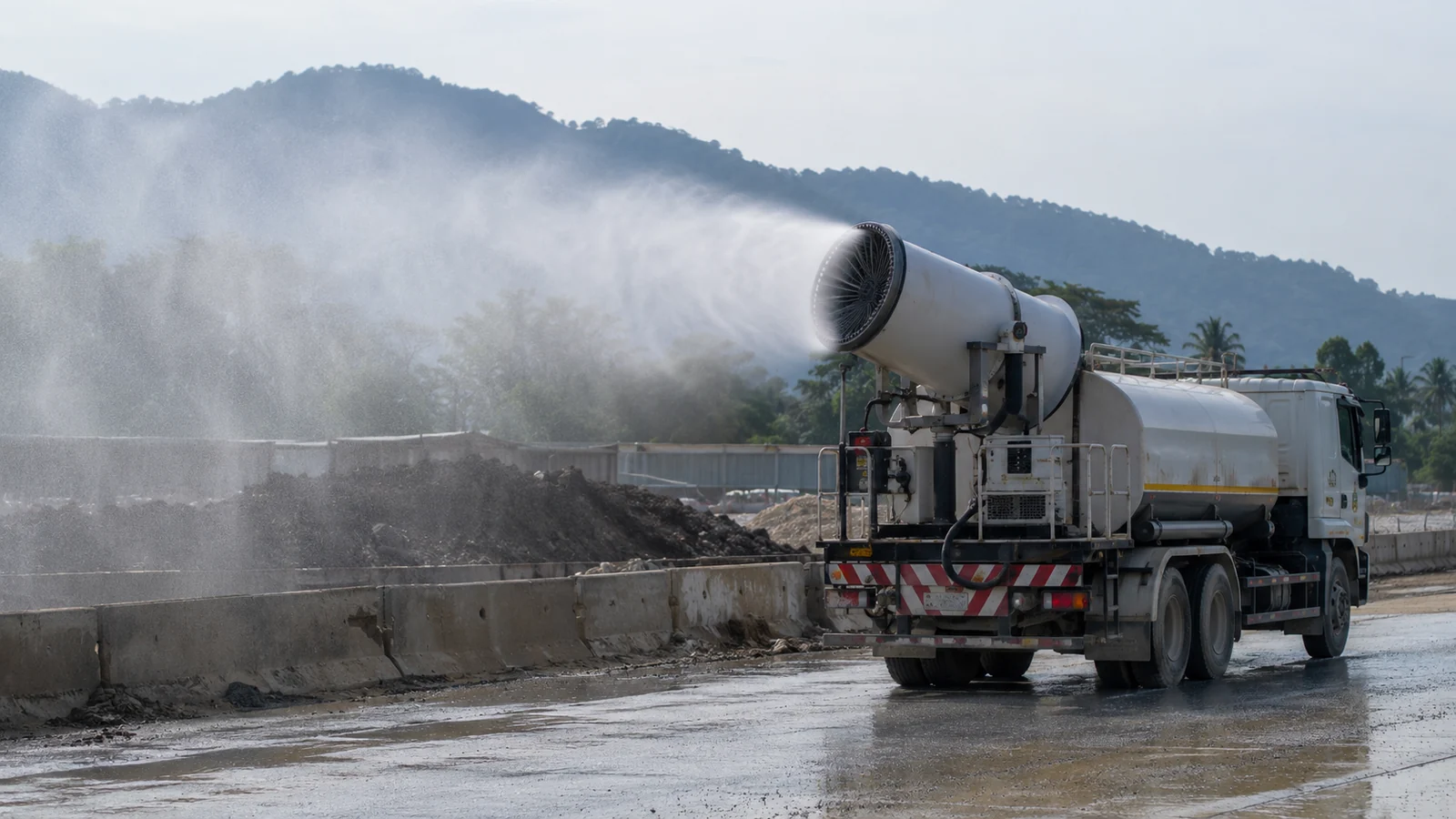
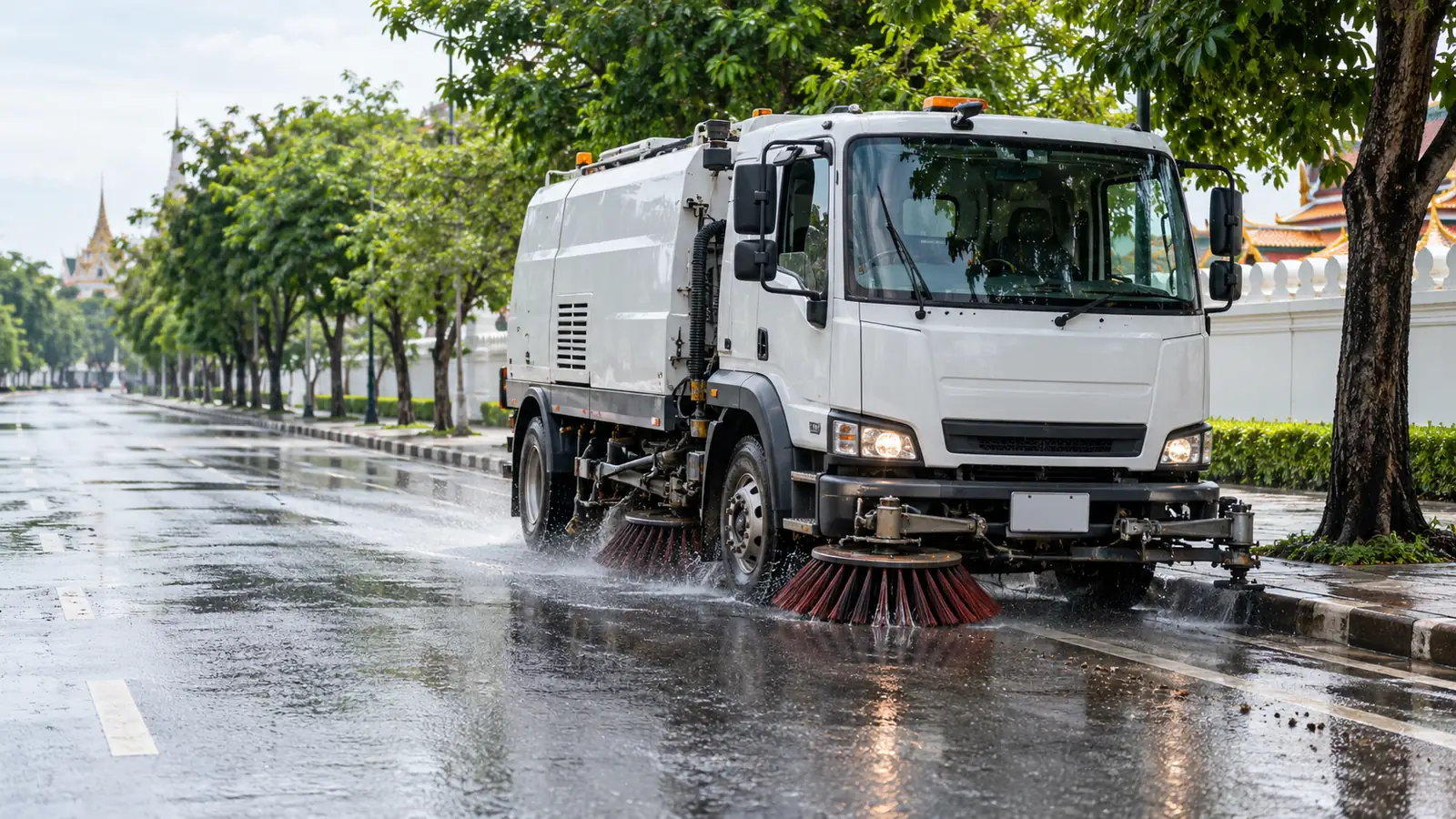
Water mist can help suppress airborne or freshly disturbed dust in an appropriate work area. A road sweeper removes loose material from the paved surface before traffic lifts it again. Neither is a universal substitute for the other, and neither should be described as a guaranteed solution to all PM2.5 pollution.
Match the machine to the dust pathway
| Worksite problem | More relevant equipment | Practical limit |
|---|---|---|
| Loose sand, leaves and litter on paved roads | Road sweeper with appropriate pickup and dust-control system | Needs disposal planning and access to road edges. |
| Dust dispersed around demolition or material handling | Fog cannon or localized mist system | Wind and spray direction affect the treated area. |
| Both dirty pavement and airborne dust | Coordinated sweeping and targeted spraying | Requires water, waste handling and safe traffic control. |
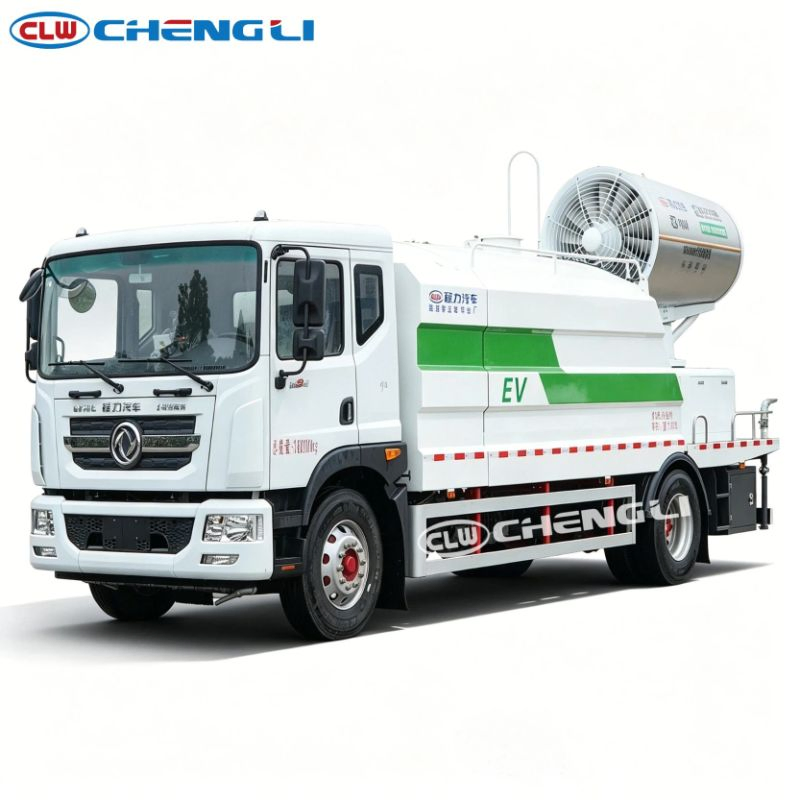
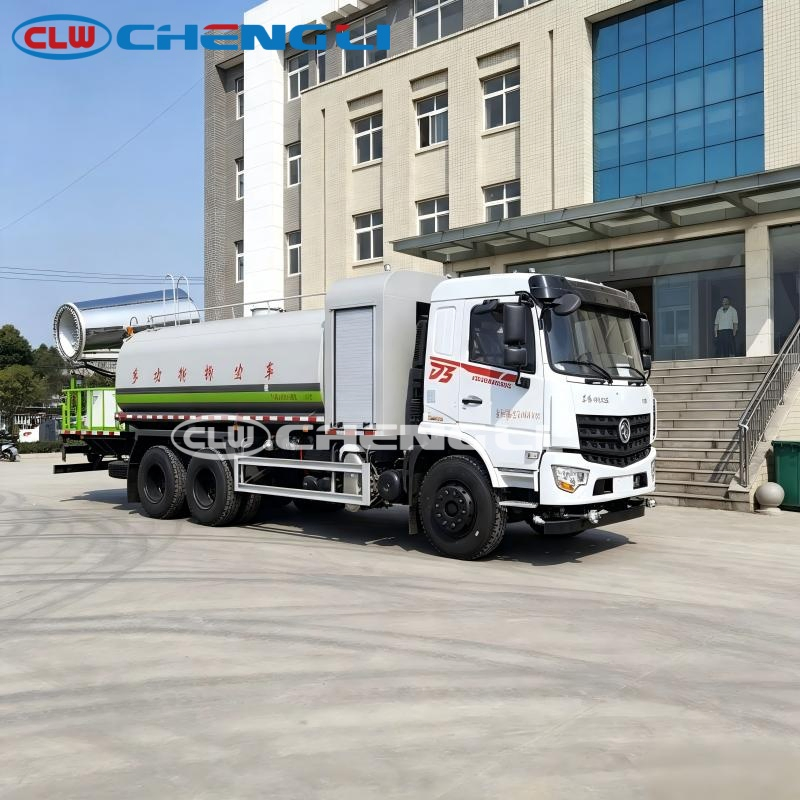
A fog cannon uses a fan and water spray to project droplets. A sweeper mechanically brushes and collects debris, often with suction and water to limit re-entrainment. Select by measured site geometry and operating conditions rather than the longest range printed in a catalog.
How much spray range is useful?
Map the area to be treated, distance from a safe vehicle position, obstacles, prevailing wind and nearby pedestrians or property. Ask for the test conditions behind any stated range and for droplet, flow and nozzle information. An excessive range can waste water or create overspray without improving coverage. Smaller roads or yards may be better served by controlled spray bars or a shorter-range unit.
The 100 m fog-cannon model, 13 m³ electric dust-control truck and Dongfeng 13.3 m³ dust-control truck represent different configurations; use their actual equipment and route constraints when comparing them.
Plan tank duration and vehicle weight
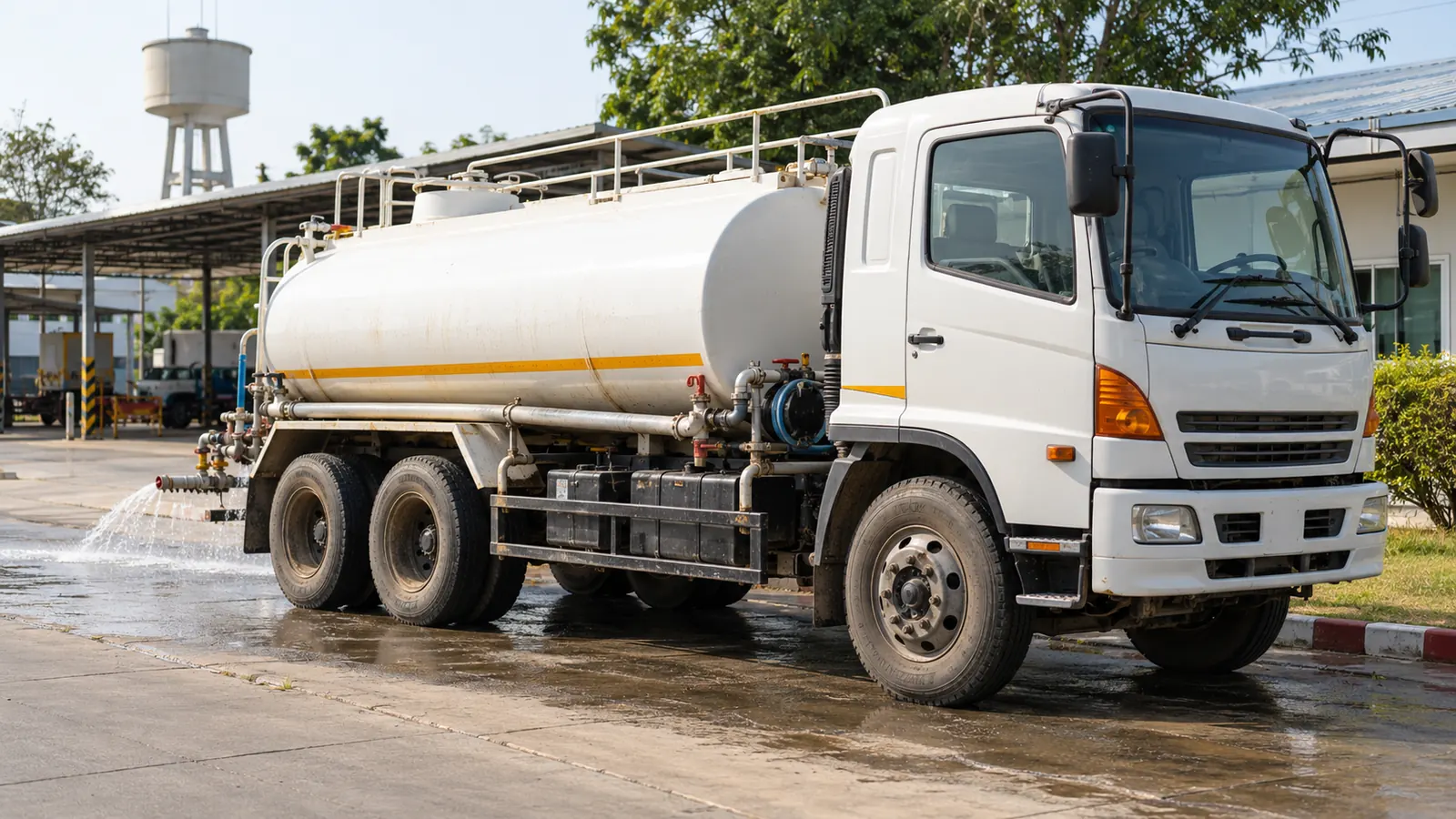
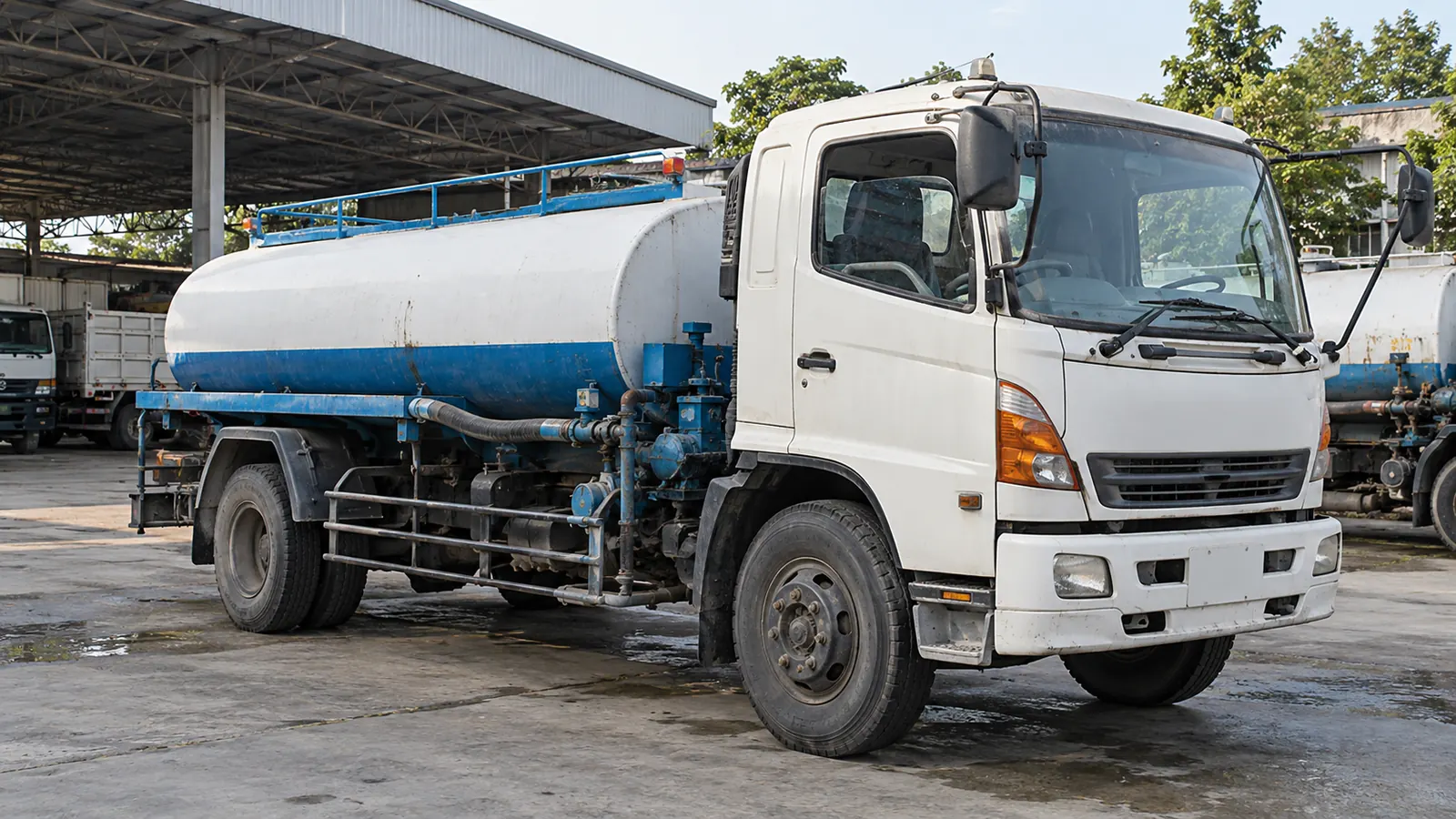
Working time from one fill is tank water actually usable divided by total water flow through the chosen outlets. State the operating nozzle settings and allow for refilling, moving and idle time. A high-flow cannon may exhaust the tank much sooner than a gentle road-spray setting. The tank itself also has to fit the legal loaded-weight envelope, as explained in the vehicle-weight guide.
Electric and diesel choices should be compared against charging or fueling access, route length, auxiliary power demand and service support. For a tender, describe the result sought—treatable area, safe operating distance, water use and duty cycle—then require test methods and acceptance conditions. Avoid specifying range alone as a proxy for dust-control performance.