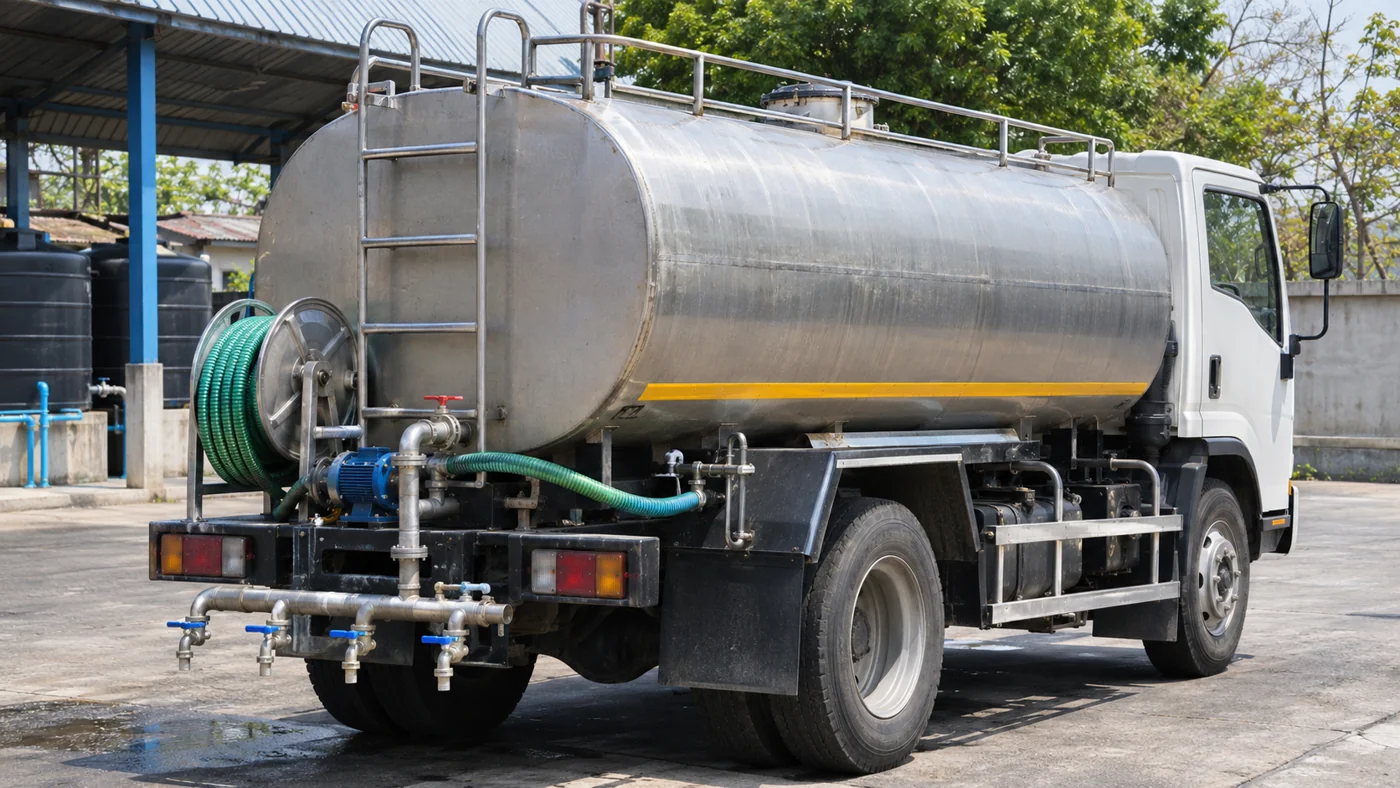
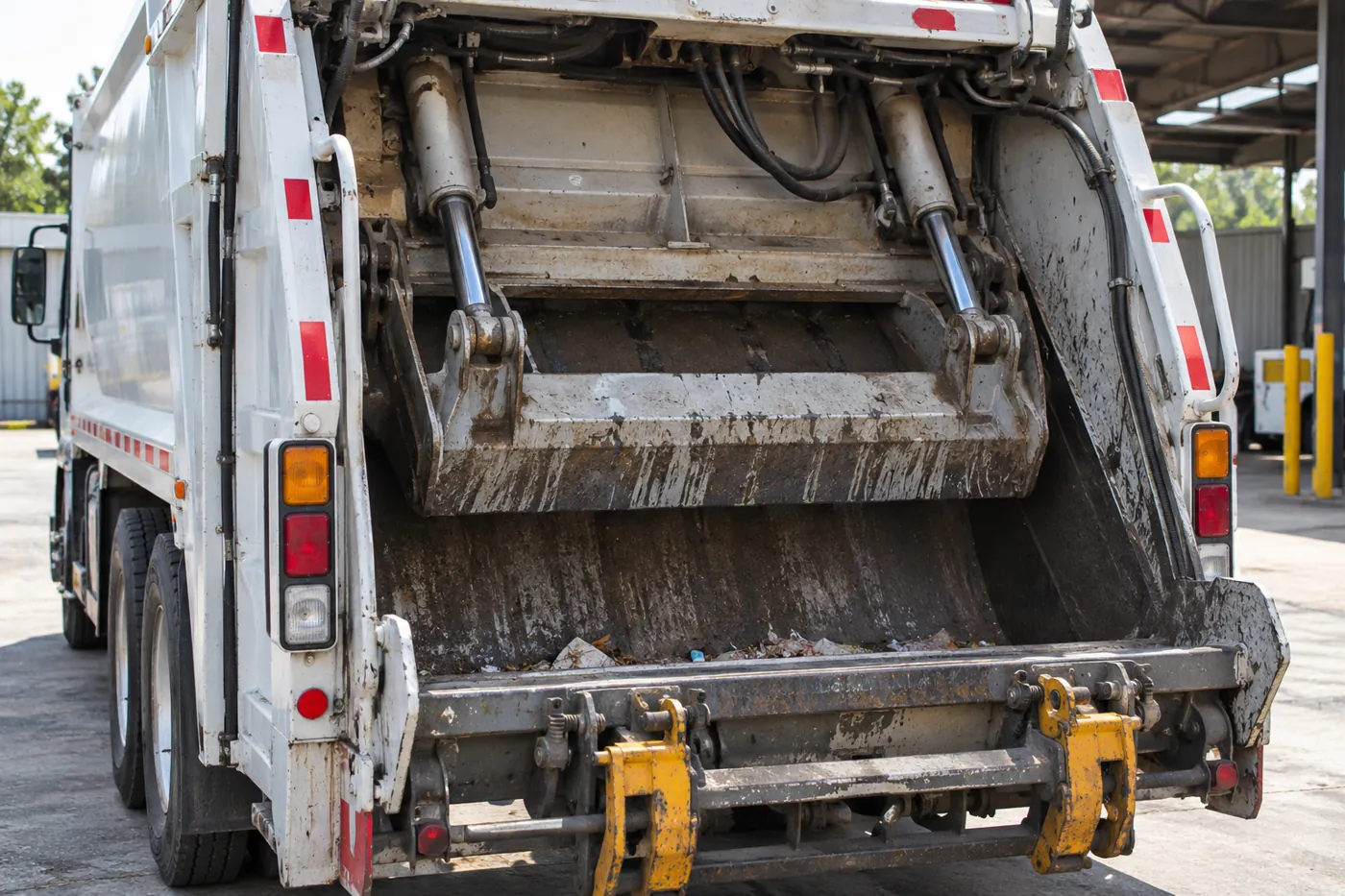
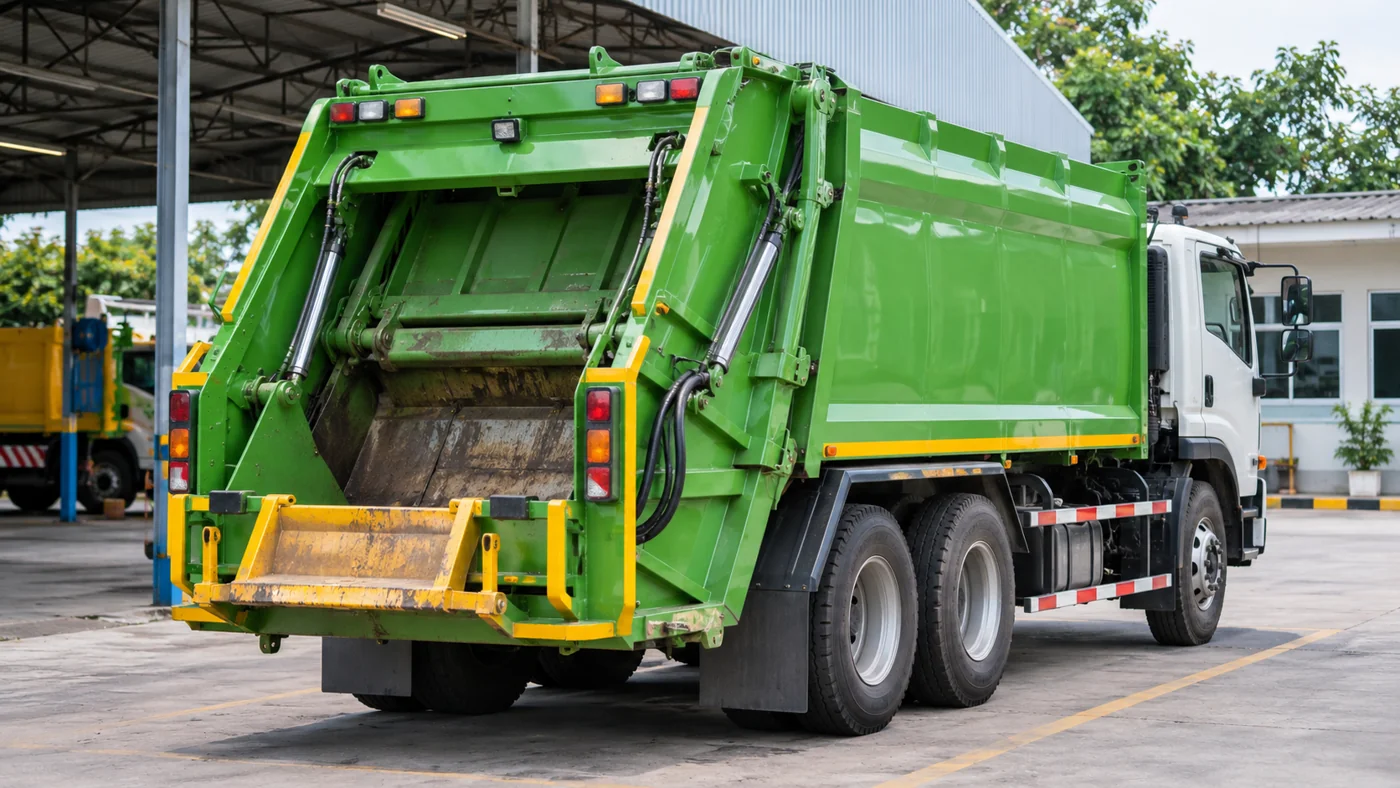
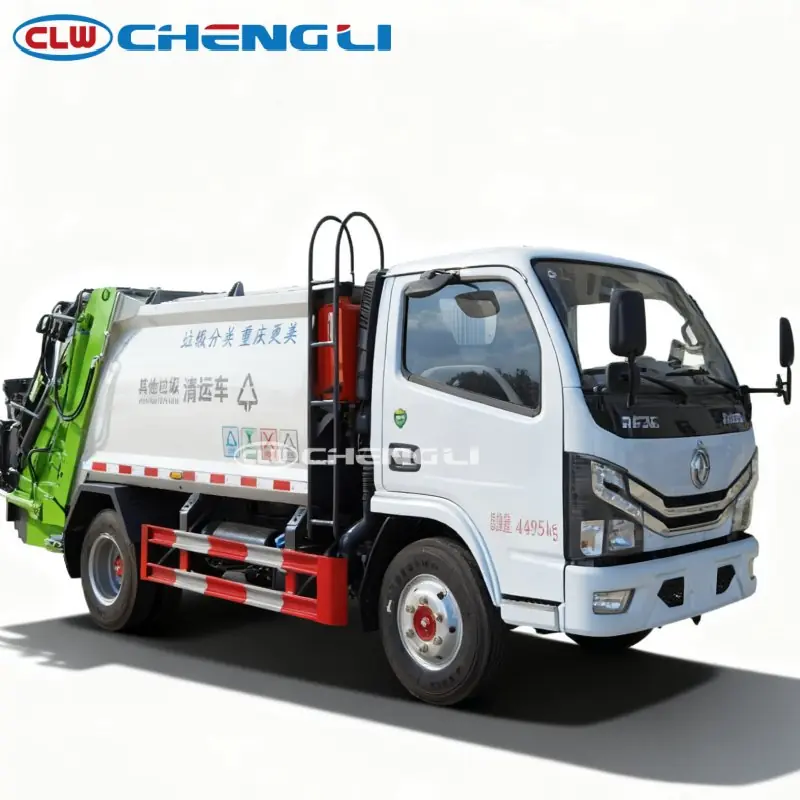
A six-wheel rear-loading compactor collects and transports municipal waste using a loading and compaction mechanism at the rear. Selection requires more than container volume: payload, route access and the finished vehicle's axle loads all matter. A “six-tonne” designation in a purchase specification can refer to a chassis rating; it does not automatically mean a six-cubic-metre body or six tonnes of waste per trip.
Separate body volume from payload
Body volume describes available space; payload describes the weight a vehicle can carry. The completed body, equipment, driver and waste all contribute to vehicle and axle loads. Wet or dense waste can reach the weight limit before the body is full.
Plan the route and workload
- Use actual weighbridge data to assess waste type, weight, moisture and seasonal changes.
- Plan trips using daily waste volume, usable capacity and travel time to the disposal site.
- Check road width, turning space, overhead clearance and collection stopping points.
- Match the bin lift to existing containers and consider leachate containment for the intended waste.
Write the specification and budget
Describe body volume, finished-vehicle payload, dimensions, compactor, bin lift, safety equipment, training and delivery documents. For Thailand, specify right-hand drive in the procurement and technical agreement. Include the vehicle, equipment, transport, taxes, maintenance and spares in the budget, then compare quotations on the same scope.
Explore vehicle options
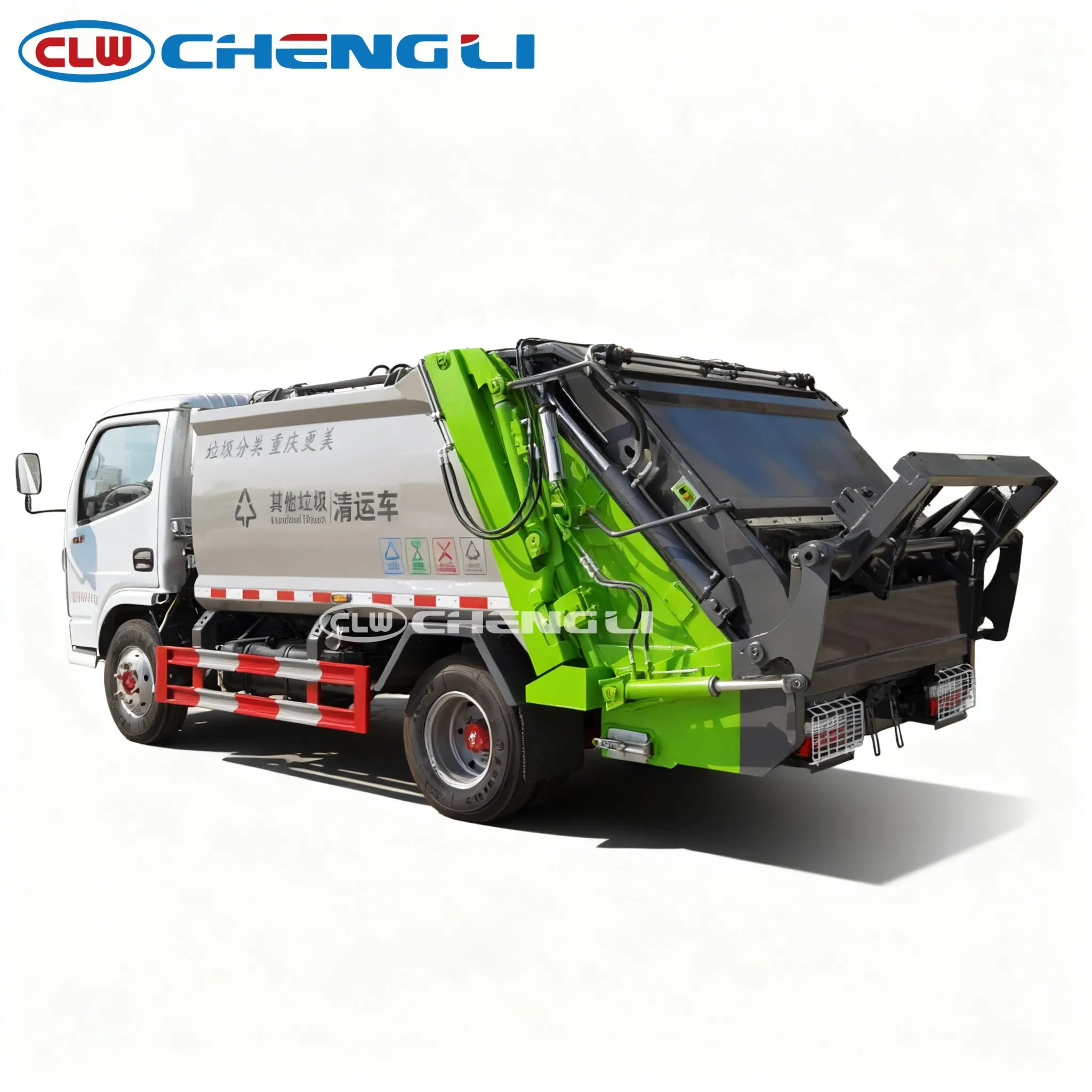
The pictured compact truck illustrates the body type; it does not represent every six-tonne procurement specification. Explore a six-wheel rear loader, compare garbage truck types, or read the municipal garbage truck guide before requesting a quote.