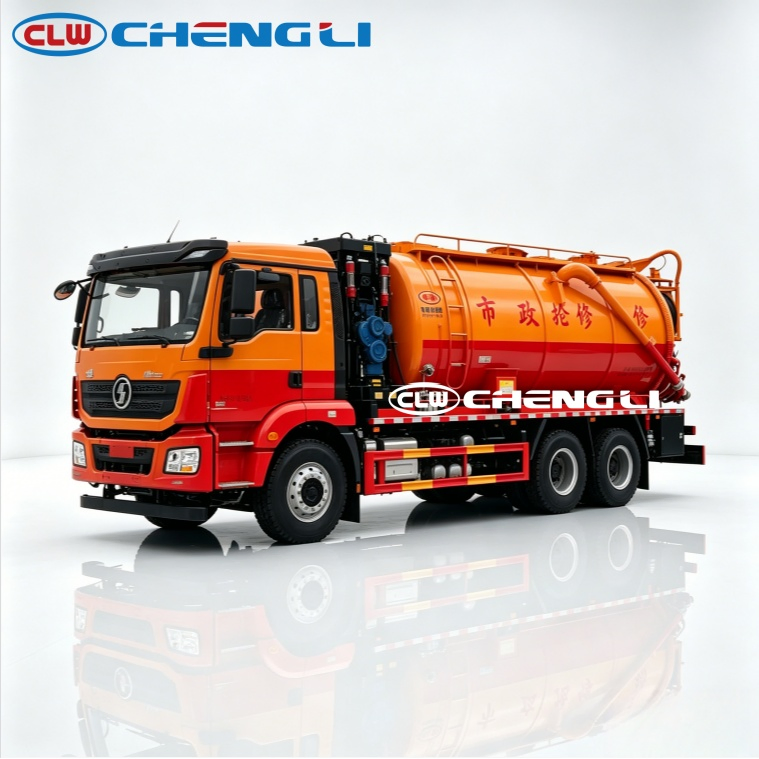
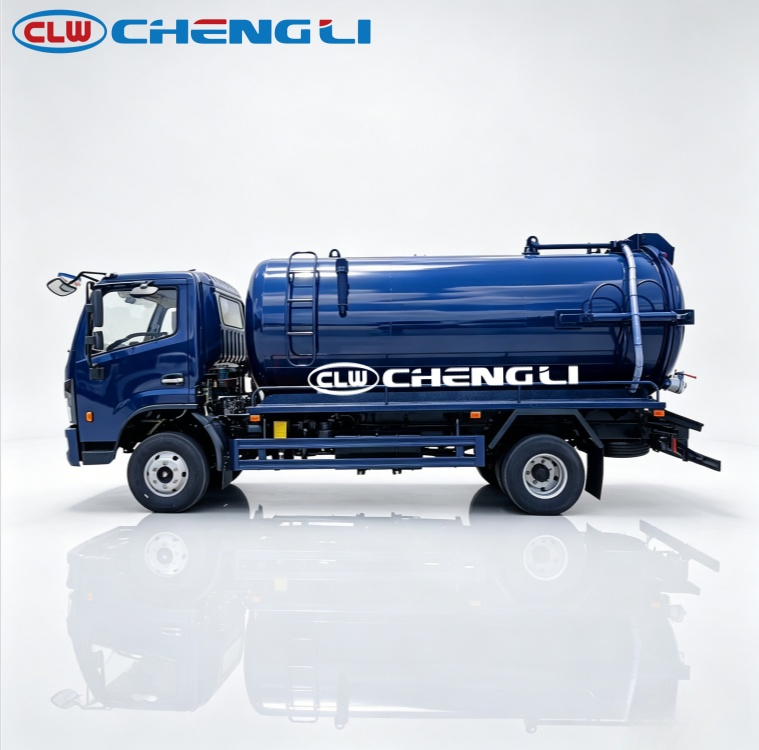
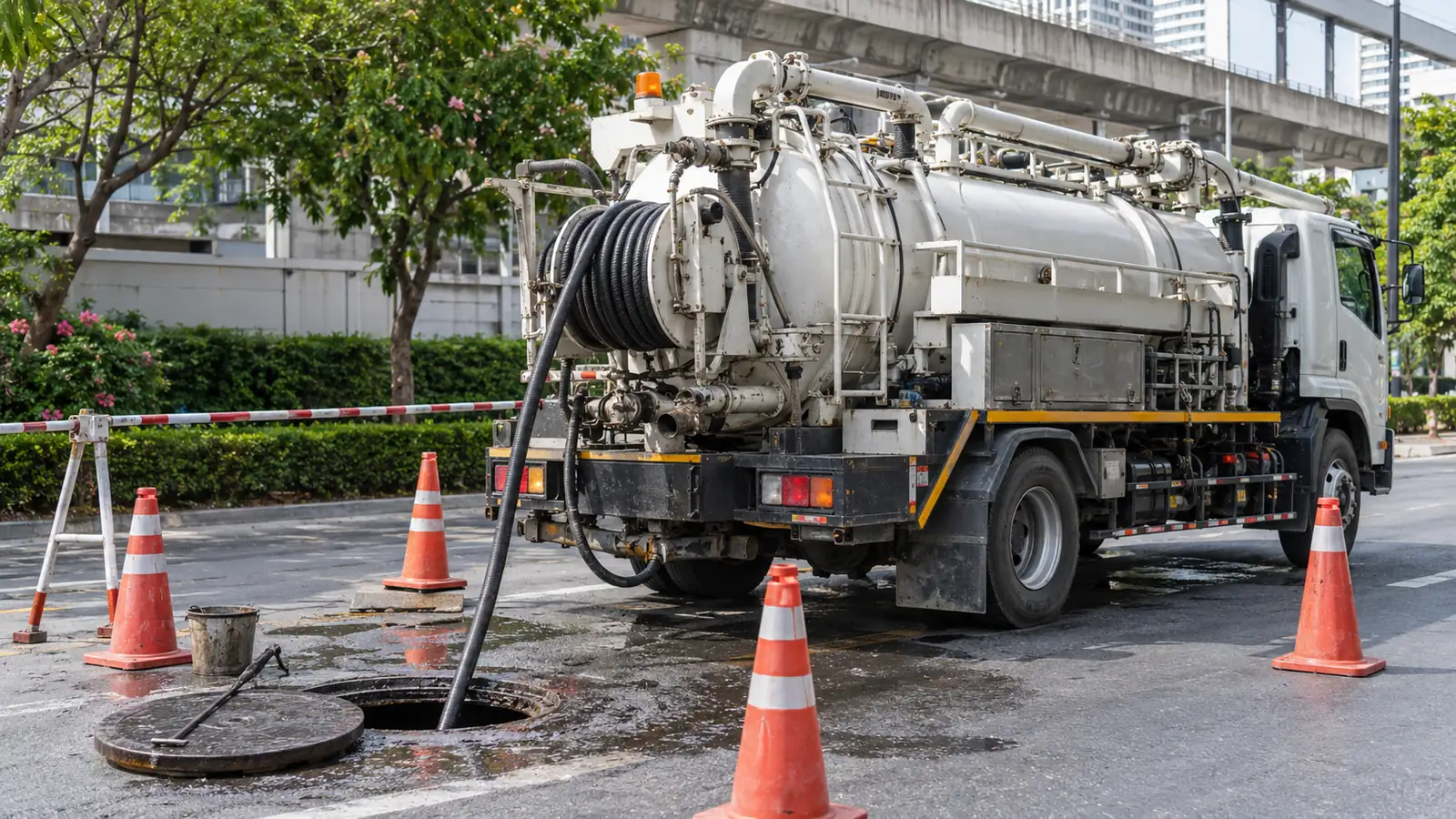
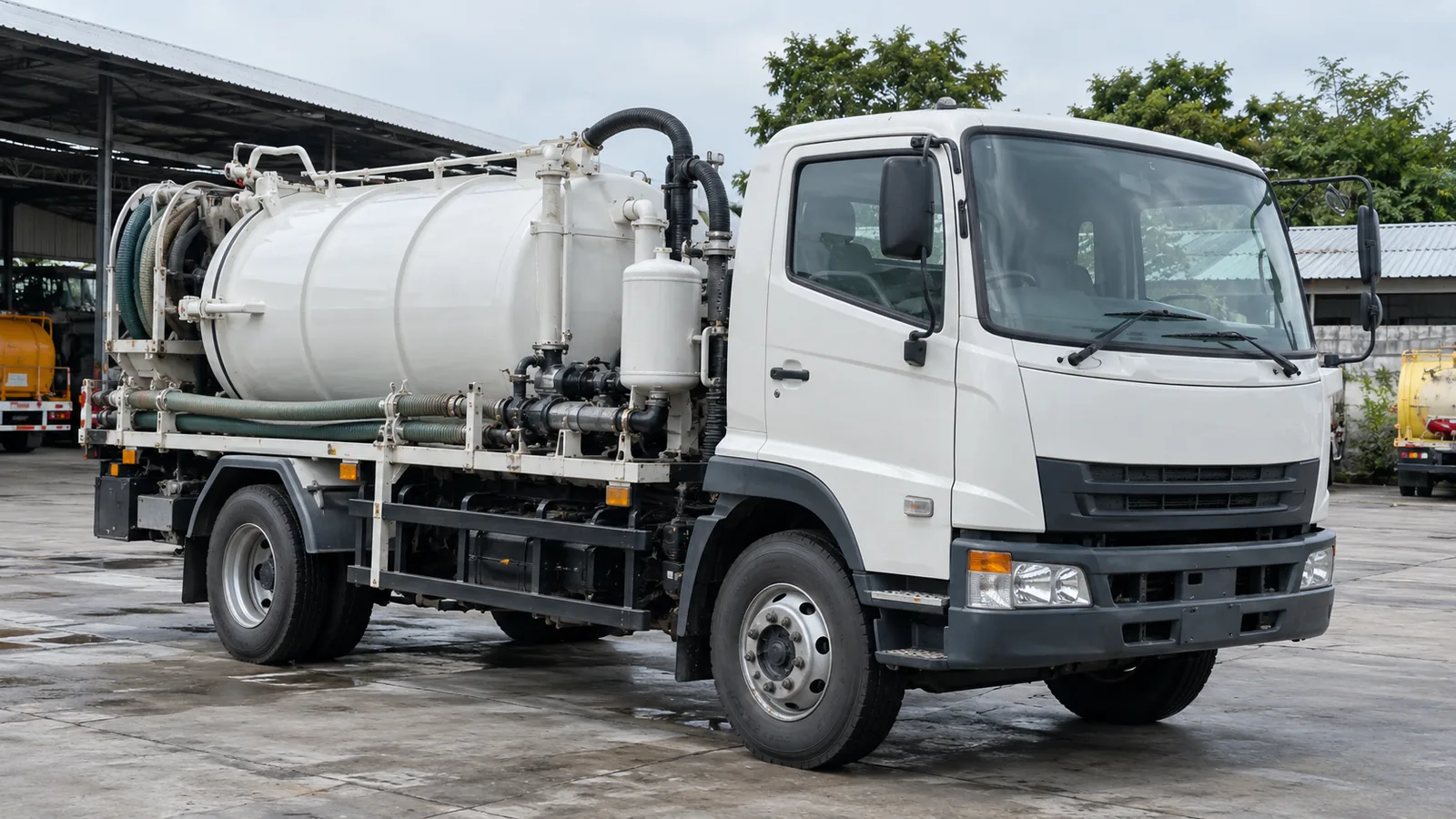
“Vacuum truck” covers several kinds of work. A septic-service vehicle primarily removes pumpable liquid and soft waste. Sludge-removal work may involve sand, grit, dense sediment or debris that settles in drains and catch basins. A combined jet-vac vehicle also carries a high-pressure water system to loosen blockages before suction. Choose by the material and access conditions, not by tank volume alone.
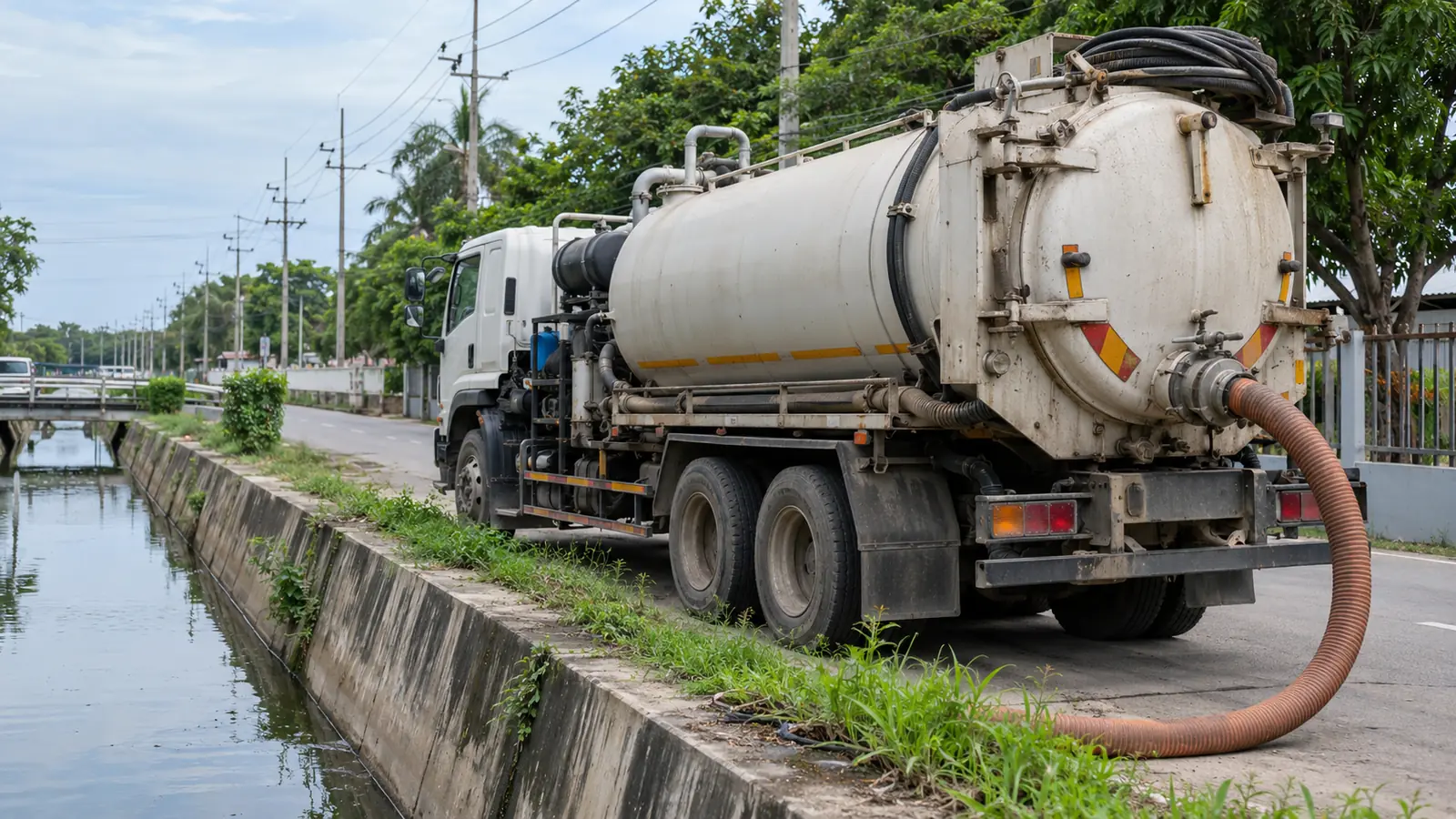
Compare the work systems
| Question | Septic-service vacuum truck | Sludge or combined jet-vac truck |
|---|---|---|
| Typical material | Pumpable liquid and soft waste | Sediment, grit, drain deposits and mixed water |
| Key system | Vacuum pump, hose and sealed tank | Vacuum system plus suitable sediment handling; some models add water jetting |
| Discharge | Controlled liquid discharge | May need a tipping or other sediment-discharge arrangement |
| Site access | Septic tanks and service points | Catch basins, drains, channels and restricted urban sites |
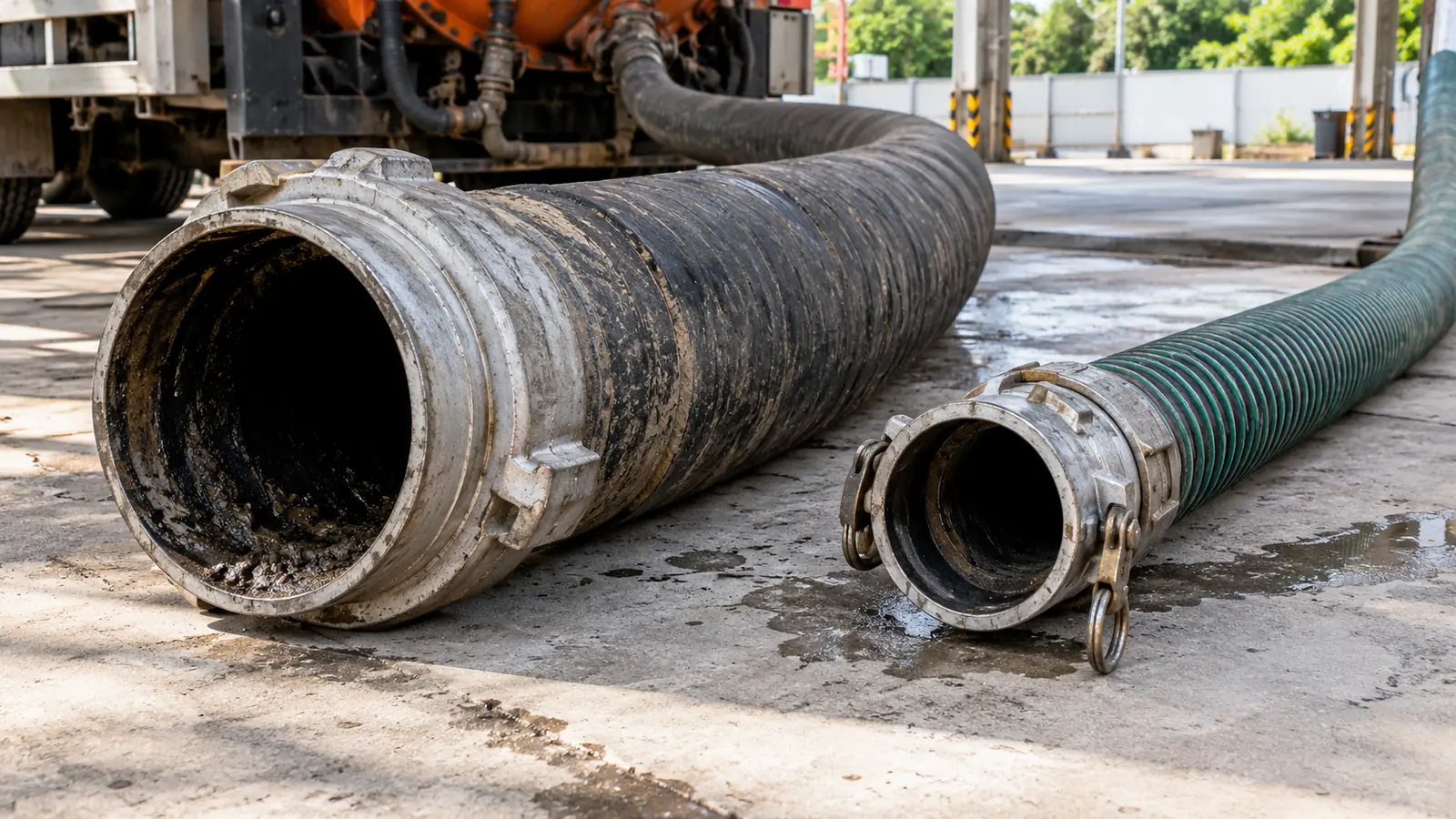
Review hose diameter and length, vacuum performance at the operating point, filtration or moisture separation, tank cleaning access and discharge mechanism. Material with stones, large debris or abrasive solids needs special attention; not every vacuum pump and tank is designed for it.
When is high-pressure jetting useful?
For a blocked drain, water jetting loosens or moves deposits and suction removes the resulting slurry. Specify pressure and flow at the hose/nozzle, reel length, water capacity, hose access and safe operating procedure. Our jetting pressure and flow guide explains why a headline pressure value is not enough.
Compare an 8,000 L river-sludge jet-vac truck, a 6,000 L low-profile jet-vac truck and a heavy-duty Shacman jet-vac truck by working environment and documented equipment rather than assuming they share the same capability.
Capacity is not the permitted load
Wet sediment can be denser than water. A geometrically full tank may exceed vehicle or axle limits even when the nominal volume sounds appropriate. Obtain the completed vehicle's empty weight and calculate the allowable material mass under the operating rules. Review the weight calculation guide before specifying the tank and discharge route.
For a quotation, describe the material, solids size, typical depth, hose reach, daily volume, dumping location, road access, right-hand-drive requirement and destination. Ask how the selected configuration will be inspected, cleaned and maintained. Contractual warranty, training and spare parts should be specified for that exact configuration.